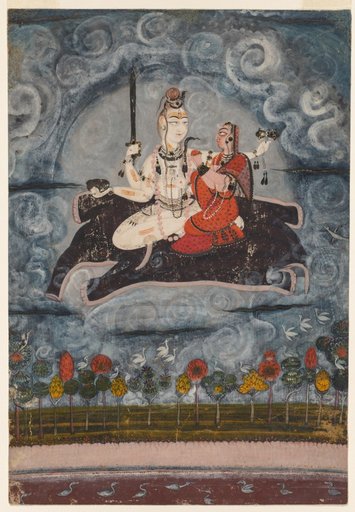
Shiva and Devi on Gajasura's hide
From the collection of Cleveland Museum of Art. Free to download, adapt and use — no permission needed.
These divine lovers embody the duality of opposites: male/female, yogi/princess, death/ birth, and destruction/creation. Their gazes are locked on each other, linking them in loving unity as they float on the skin of an elephant demon through swirling monsoon clouds above the earth. The god Shiva looks like a yogi with matted locks of hair entwined with serpents, white skin smeared with ash from funeral pyres, the third eye of true knowledge, triple-line sectarian marks, a garland of severed heads, and the leopard-skin loincloth. In three hands he holds emblems of destruction: skull cup, sword, and a drum that beats the rhythm of time. His fourth hand rests tenderly on the shoulder of his wife, the goddess Devi, also known as Parvati, who perches on his lap, her hands in a gesture of honor.
Cleveland Museum of Art’s own description