CC0 · no rights reserved
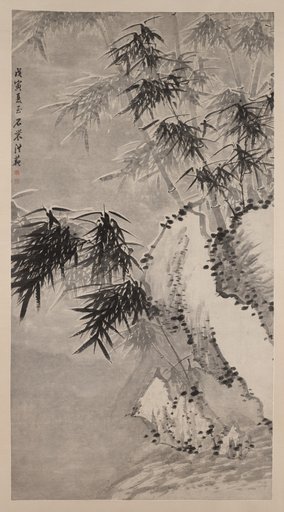
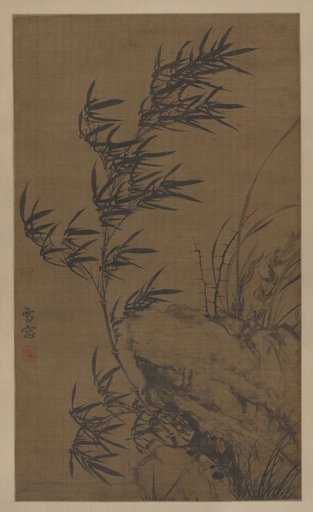
Bamboo in the Wind
From the collection of Cleveland Museum of Art. Free to download, adapt and use — no permission needed.
About this work
Bamboo is an evergreen plant that does not break under the weight of snow or the force of the wind, and thus became a favorite motif in literati painting and Chan Buddhism as a metaphor for the virtue of not yielding to worldly temptations. Xuechuang, also known as monk Puming, was a native of Songjiang, near Shanghai, who spent his life as a monk in Suzhou. In 1338, he presided over Yunyan temple on Tiger Hill. Here, he masterfully depicts a bamboo gently bent in a subtle breeze. Puming’s paintings were revered in Japan and Korea.
Cleveland Museum of Art’s own descriptionCredit lineBamboo in the Wind (風竹圖), 1300s. Puming (Xuechuang) (Chinese, active before 1274-after 1329). Hanging scroll; ink on silk; painting: 77.6 x 45.7 cm (30 9/16 x 18 in.); overall with knobs: 209.5 x 75.5 cm (82 1/2 x 29 3/4 in.). The Cleveland Museum of Art, John L. Severance Fund, 1953.246