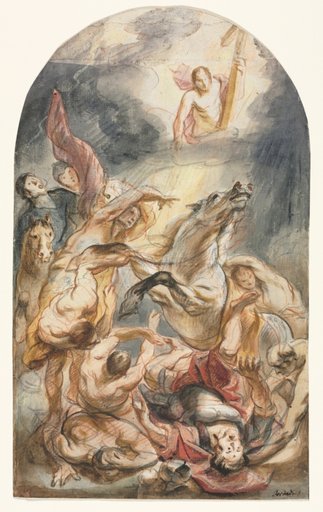
The Conversion of Saul with Christ and the Cross
From the collection of Cleveland Museum of Art. Free to download, adapt and use — no permission needed.
Jacob Jordaens was a prominent artist working in Antwerp in the 17th century. Though influenced in his use of powerful forms and vibrant color by his contemporary, Peter Paul Rubens, Jordaens was notably more realist in his tendencies. This drawing and its companion drawing in the Cleveland Museum of Art's collection (1954.366) are very likely studies for a painting depicting the Conversion of Saint Paul that Jordaens made for the the abbey church at Tongerlo, near Antwerp, in around 1647 (now lost). According to the Bible, in the year following the death of Jesus Christ, Saul of Tarsus (who became Saint Paul) was on the road to Damascus. He was suddenly surrounded by a brilliant light from above, heard the voice of Christ, and became a believer. In this work, Saul appears to have been blinded by the force of Christ's voice and heavenly light. Jordaens used a combination of chalks and wet media such as ink and watercolor to create a swirling mass of bodies bathed in light.
Cleveland Museum of Art’s own descriptionSimilar works
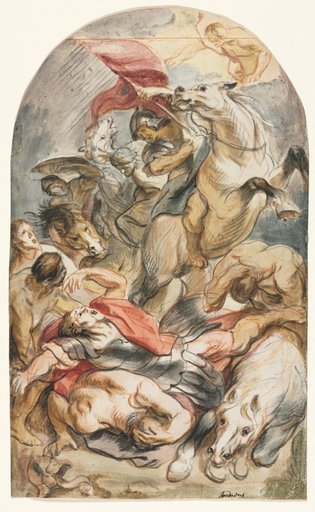 The Conversion of Saul with Horseman and Banner
 Floating People, Fantastical Creatures, and Cats
 Design for a Wall Panel or Ceiling with The Virgin and Saints Interceding before Christ for the Souls of the Lost
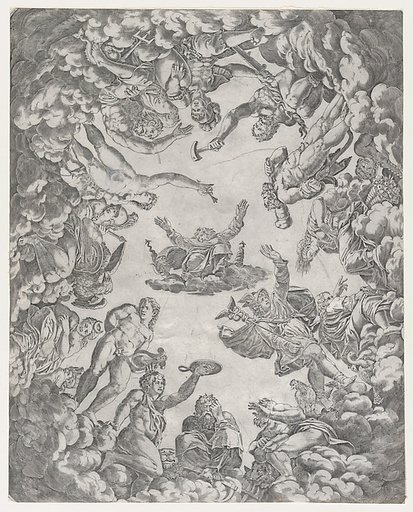 Sistine Frescoes, from "Speculum Romanae Magnificentiae"
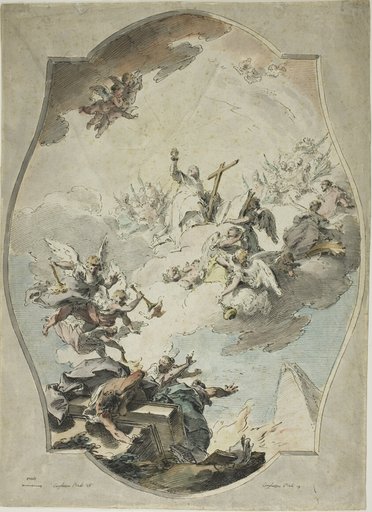 Faith Overcoming Heresy (recto); Tracing after Faith Overcoming Heresy (verso)
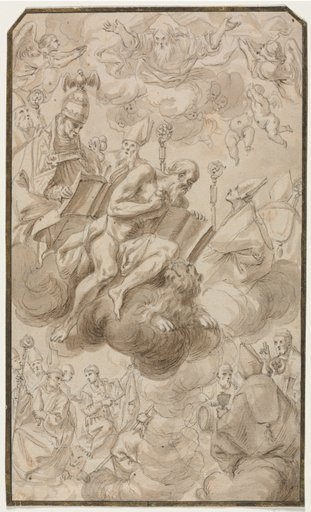 Ascension of Saint Jerome