CC0 · no rights reserved
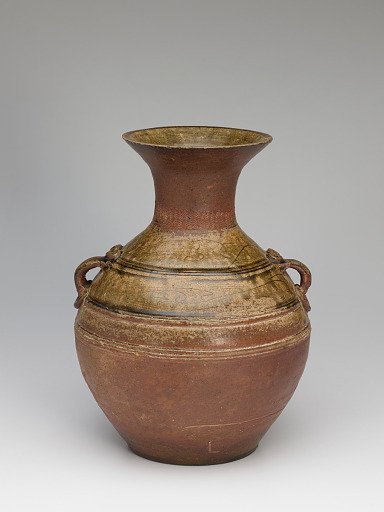
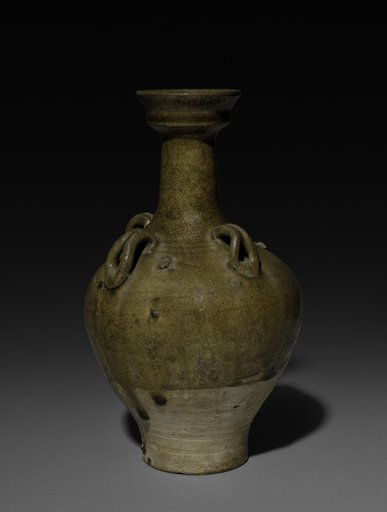
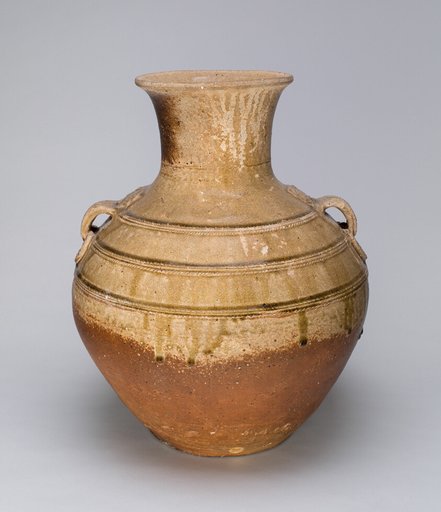
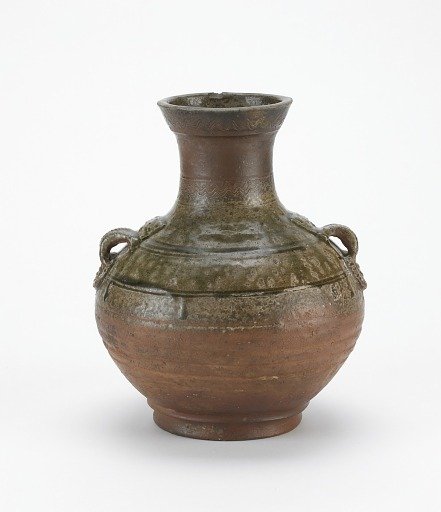
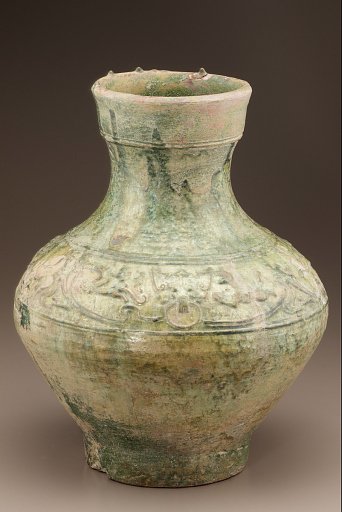
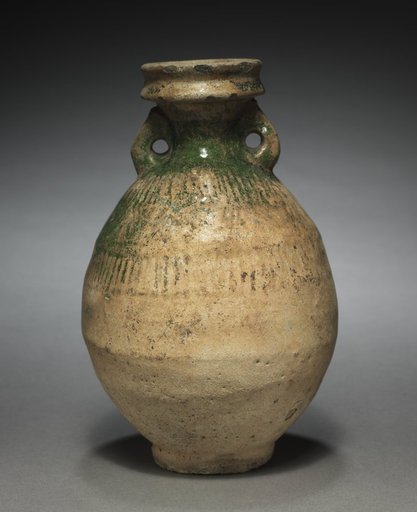
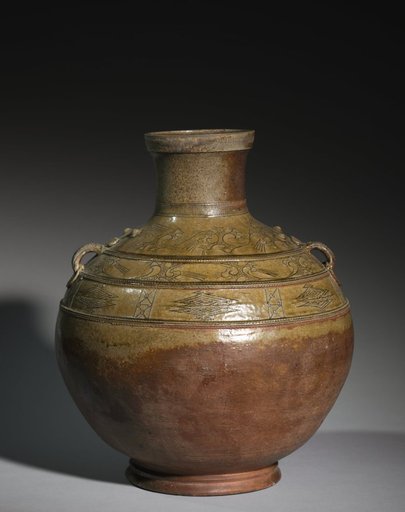
Jar (Hu)
From the collection of Cleveland Museum of Art. Free to download, adapt and use — no permission needed.
About this work
This superb Han dynasty jar has a robust shape imitating that of the bronze ( hu ) and is covered with a thin brownish-green glaze. The introduction of glazing—which provided an impervious coating to a clay body—marked a technological breakthrough in Chinese ceramic history. High-fired glazed pots were made as early as the Shang and Zhou dynasties (about 1600–256 BC). Potters gained practical technical knowledge of the reaction between the metallic oxide in the glaze and the kiln atmosphere to modify the color of a glaze.
Cleveland Museum of Art’s own descriptionCredit lineJar (Hu) (壺), 100 BCE–100 CE. China, probably Zhejiang province, Han dynasty (202 BCE–220 CE). Glazed stoneware with incised and applied decoration; diameter: 39.4 cm (15 1/2 in.); overall: 45.7 cm (18 in.). The Cleveland Museum of Art, Edward L. Whittemore Fund, 1954.370