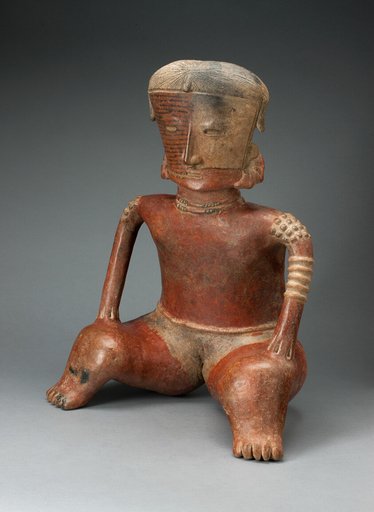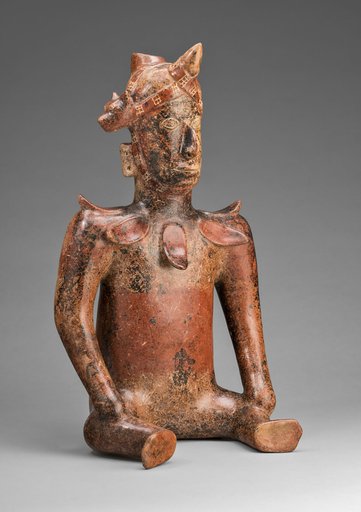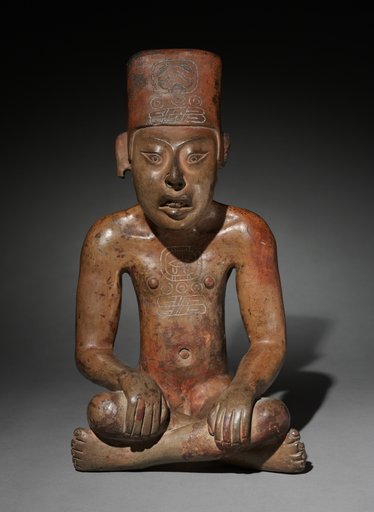
Seated Figure
From the collection of Cleveland Museum of Art. Free to download, adapt and use — no permission needed.
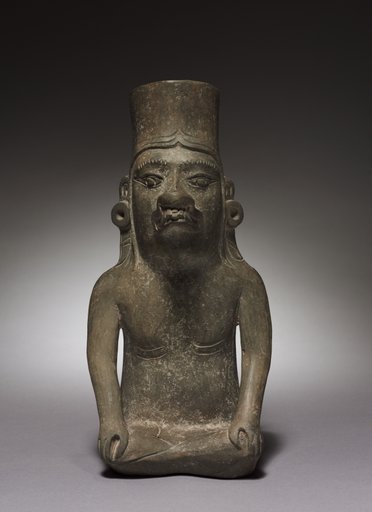
The most famous Zapotec tomb ceramics are elaborate figural urns flanked by smaller, simpler companions similar to this one. Like other companions, this example probably belonged to a set of nearly identical figures; two others remain in Mexico. The identity of ceramic tomb figures-whether elite humans, royal ancestors, or deities-is still debated. The Zapotec developed one of Mesoamerica’s earliest writing systems, evidenced by the hieroglyphs on the headdress and chest. These are the names of calendar days, "13 Water" and "13 Flint Knife," respectively. Because people were named after the day on which they were born, one hieroglyph may identify the figure.
Cleveland Museum of Art’s own description