CC0 · no rights reserved
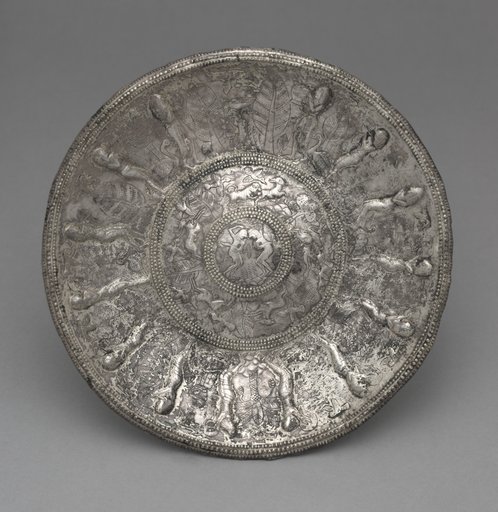
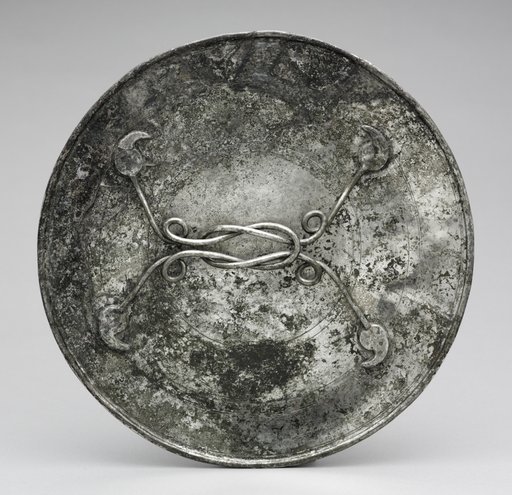
Mirror with a Handle in the Form of a Herakles Knot
From the collection of Cleveland Museum of Art. Free to download, adapt and use — no permission needed.
About this work
This type of mirror was introduced throughout the Roman Empire by the 2nd century and remained popular into the 3rd and 4th centuries. Similar examples have been found in Germany and Britain. The handle is made of two thick pieces of silver wire, intertwined to form a Herakles knot--a knot so complex that only someone as strong as Herakles could break it. In antiquity, knots of various kinds were believed to provide protection from harm.
Cleveland Museum of Art’s own descriptionCredit lineMirror with a Handle in the Form of a Herakles Knot, c. 280–400 CE. Byzantium, Syria(?), Byzantine period. Silver; diameter: 2.3 x 34.6 cm (7/8 x 13 5/8 in.). The Cleveland Museum of Art, Purchase from the J. H. Wade Fund, 1956.31