CC0 · no rights reserved
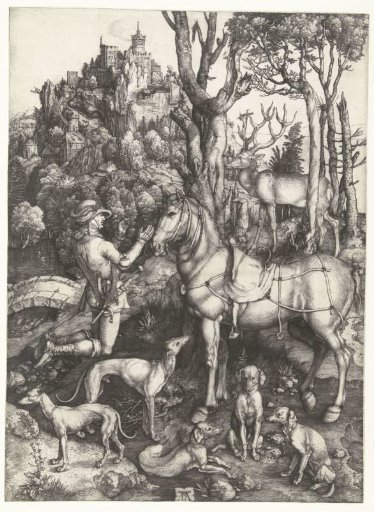
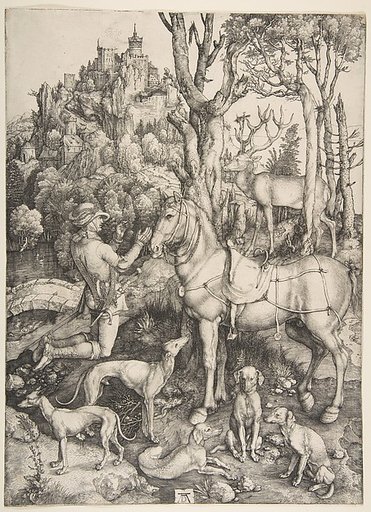
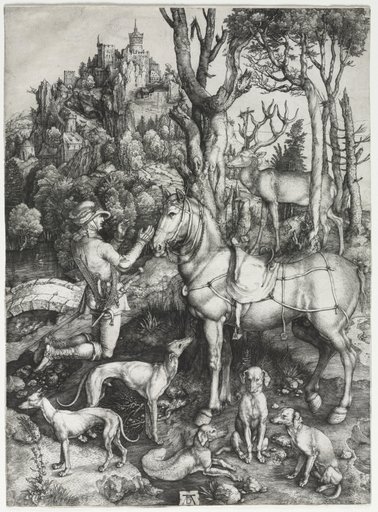
Saint Eustace
From the collection of Cleveland Museum of Art. Free to download, adapt and use — no permission needed.
About this work
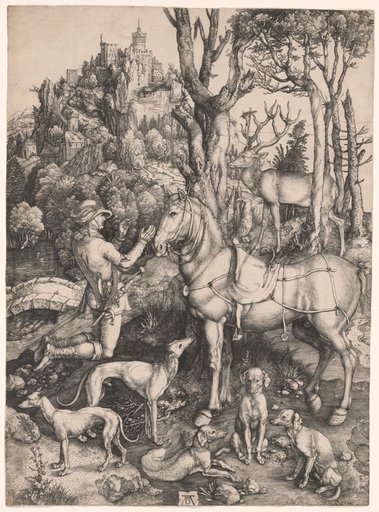
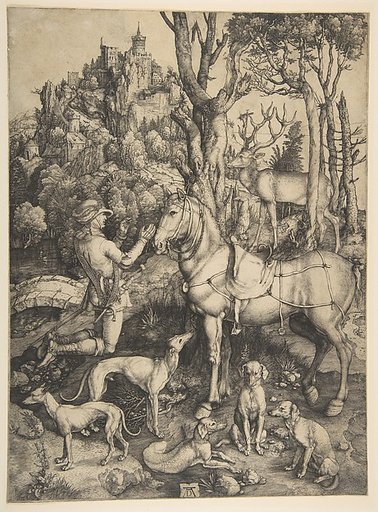
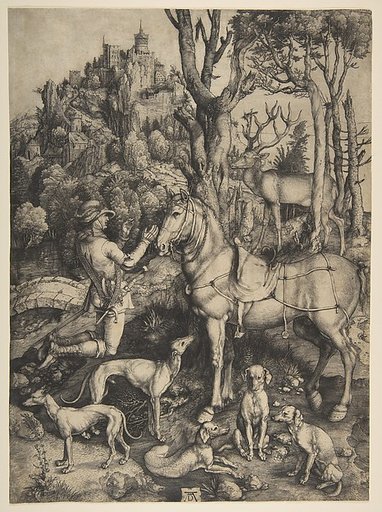
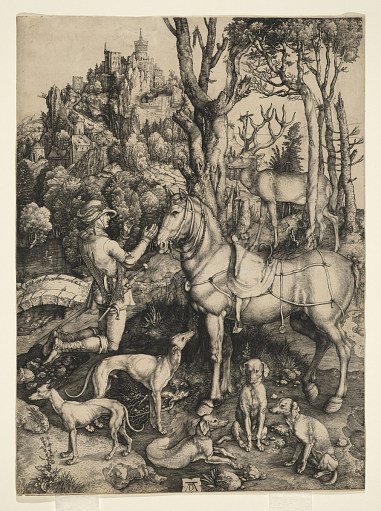
Here, an encounter with nature dramatically alters a man’s journey through life. After Roman general Placidas tracked a stag in the forest, he saw a miraculous apparition of a crucifix between its horns. The miracle resulted in the general’s (thereafter Saint Eustace) immediate conversion to Christianity. Albrecht Dürer’s largest engraving demonstrates his mastery of tonal values and textures. His intense interest in nature’s variety makes finding the crucifix a kind of treasure hunt. Dürer took particular interest in the hunting dogs by carefully posing them to show five different aspects of the canine figure.
Cleveland Museum of Art’s own descriptionCredit lineSaint Eustace, c. 1501. Albrecht Dürer (German, 1471–1528). Engraving; image: 35.4 x 26 cm (13 15/16 x 10 1/4 in.); sheet: 35.4 x 26 cm (13 15/16 x 10 1/4 in.). The Cleveland Museum of Art, Bequest of Leonard C. Hanna Jr., 1958.109