CC0 · no rights reserved
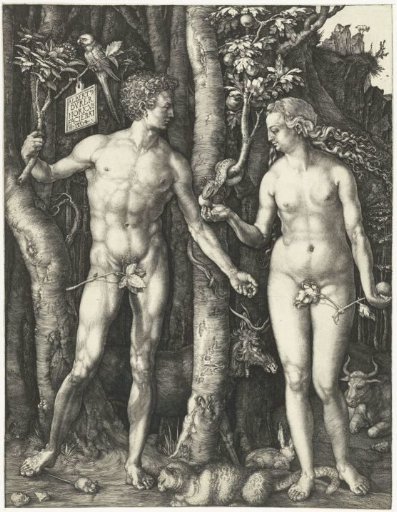
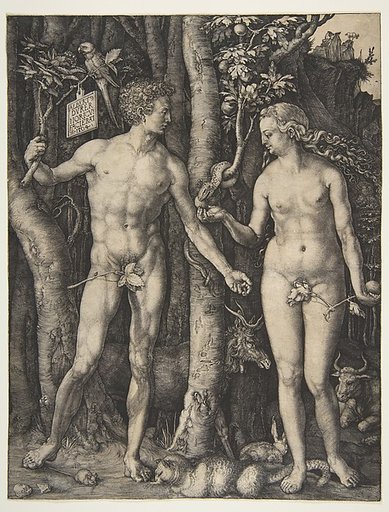
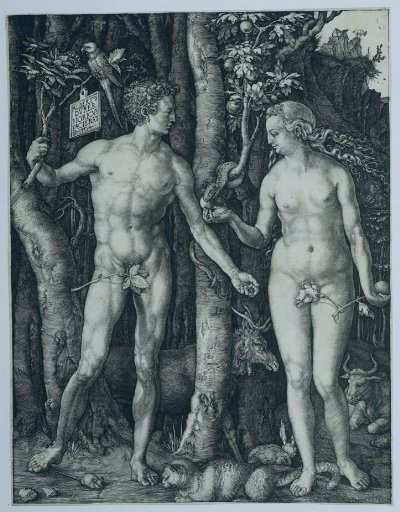
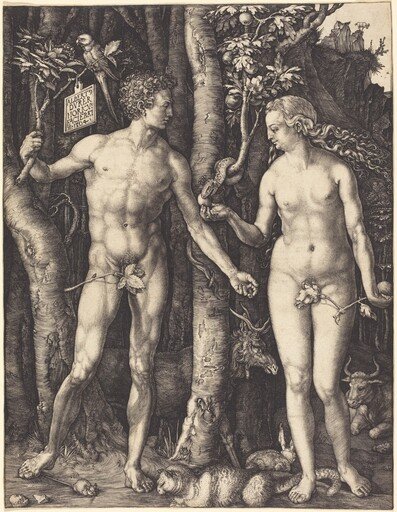
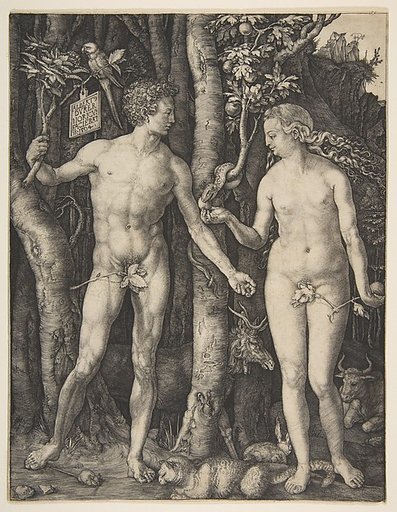
Adam and Eve
From the collection of Cleveland Museum of Art. Free to download, adapt and use — no permission needed.
About this work
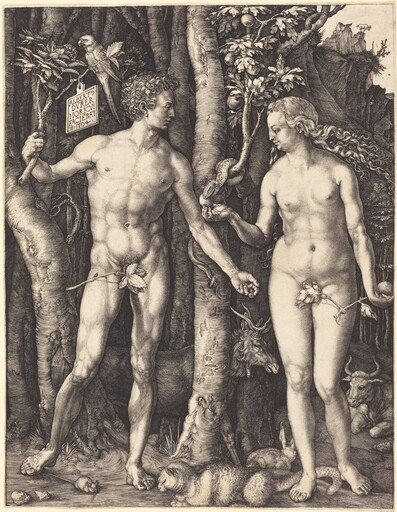
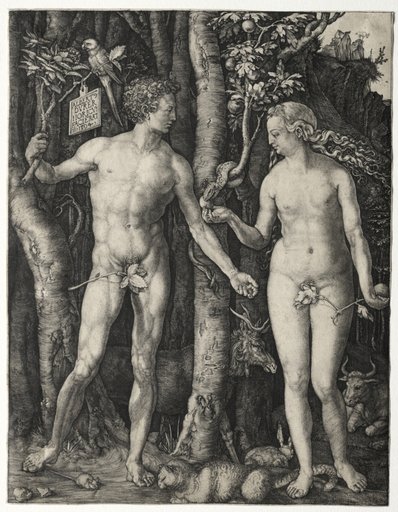
Dürer based Adam’s pose on the Apollo Belvedere, a Roman sculpture discovered in Italy during the late 1400s. He constructed the idealized bodies of Adam and Eve using geometry and a mathematical system of proportion loosely derived from ancient models. For Dürer, who mostly depicted Christian subjects, the creation of theoretically perfect human bodies was a pathway to comprehending the divine. He thus represented Adam and Eve as he understood them in both theological and artistic terms: moments before tasting the forbidden fruit, they are still uncorrupted by sin and death, existing in a state of faultless beauty.
Cleveland Museum of Art’s own descriptionCredit lineAdam and Eve, 1504. Albrecht Dürer (German, 1471–1528). Engraving. The Cleveland Museum of Art, Bequest of Leonard C. Hanna Jr., 1958.111