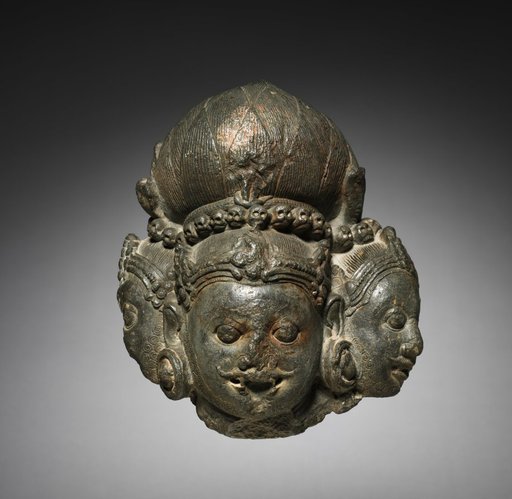
Trikala Bhairava
From the collection of Cleveland Museum of Art. Free to download, adapt and use — no permission needed.
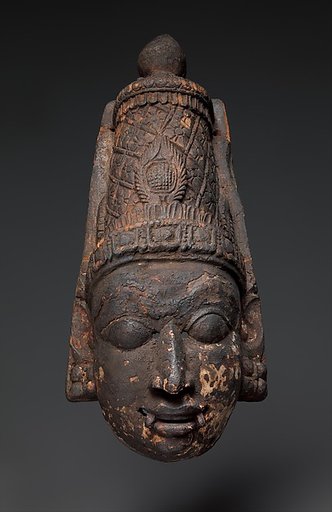
Bhairava is the name of the wrathful aspect of the Hindu god Shiva. His ferocity and fearsome attributes include the crown of skulls and cobras, bulging eyes, fangs, and hair that stands on end. His three heads are indicative of the passing of time from past through present to the future, which is the meaning of his epithet Trikala, or "triple time." The ferocity of this figure reminds devotees not to waste a moment in striving to reach liberation from the relentless passage of time that ultimately leads to death and destruction. In the Hindu tradition, liberation can be achieved through devotion to god, which may attract his merciful decision to bring the devotee to eternal blissful union with him.
Cleveland Museum of Art’s own description