CC0 · no rights reserved
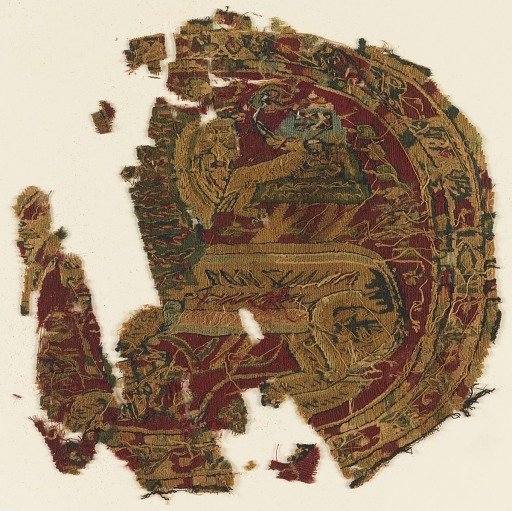
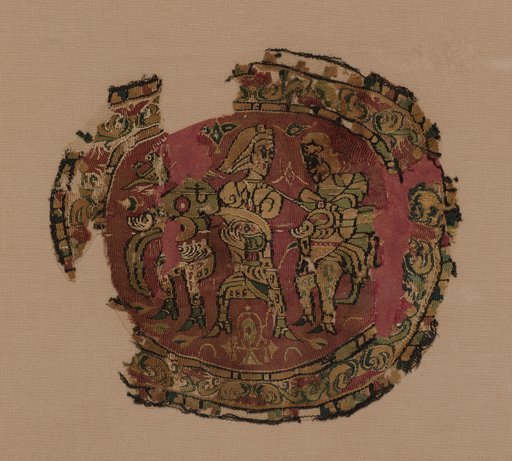
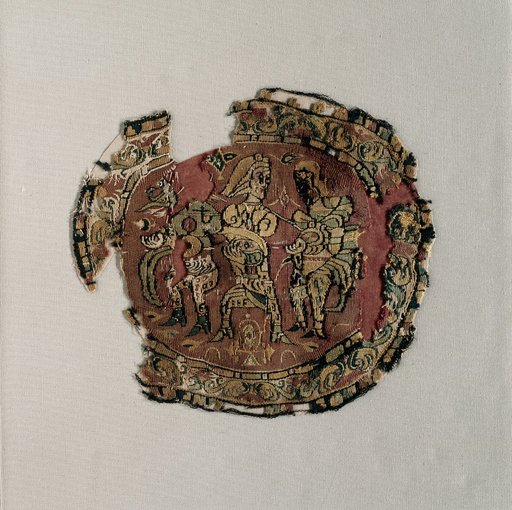
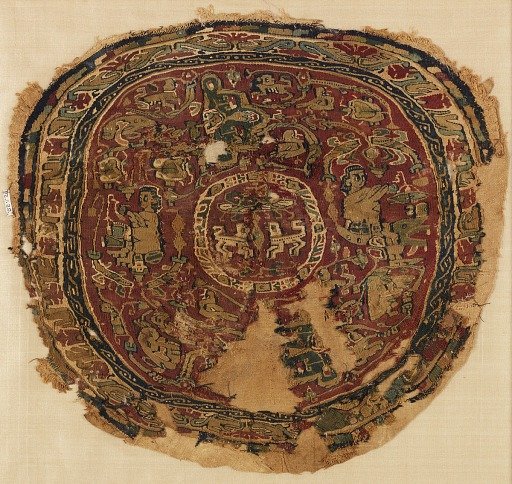
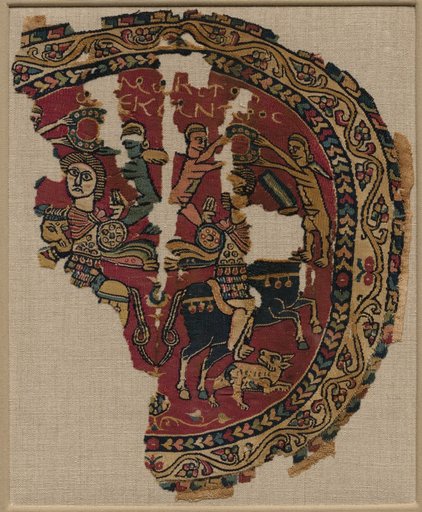
Alexander the Great on Horseback
From the collection of Cleveland Museum of Art. Free to download, adapt and use — no permission needed.
About this work
Featuring imperial Byzantine themes, this rare roundel originally decorated a tunic. Genii (guardian spirits) crown the mounted horseman in military dress while an animal runs below. The inscription at the top identifies the horseman as Alexander the Great (356-323 bc), a popular cult figure in Egypt for centuries. The pattern’s mirror-image symmetry indicates the influence of costlier Byzantine silks.
Cleveland Museum of Art’s own descriptionCredit lineAlexander the Great on Horseback, 700s. Egypt, Umayyad period (661–750) or Abbasid period (750–1258). Dyed wool, undyed linen; plain weave and slit-tapestry weave; overall: 30.5 x 24.8 cm (12 x 9 3/4 in.); mounted: 41.9 x 36.8 cm (16 1/2 x 14 1/2 in.). The Cleveland Museum of Art, Gift of The Textile Arts Club, 1959.123