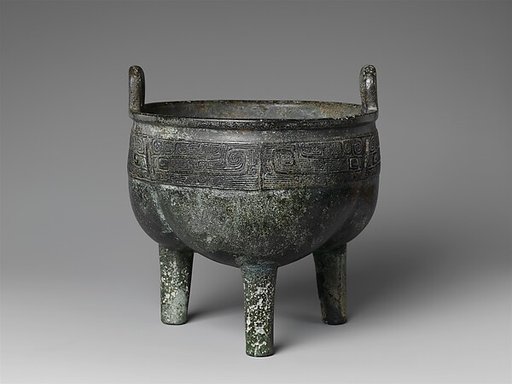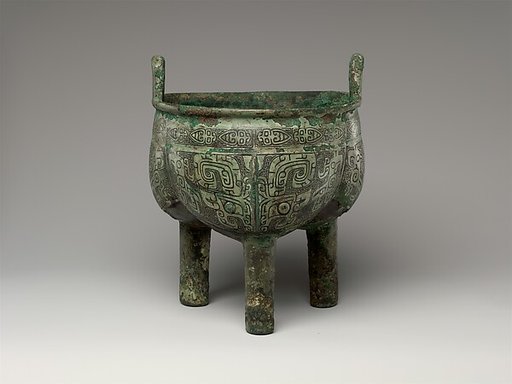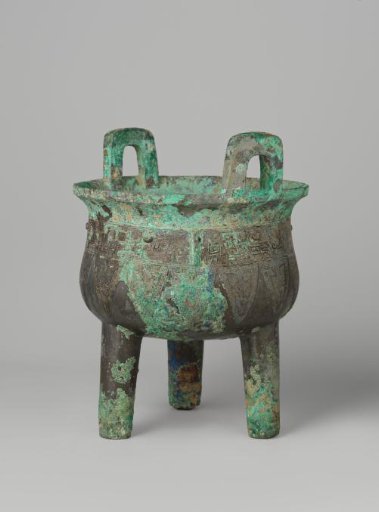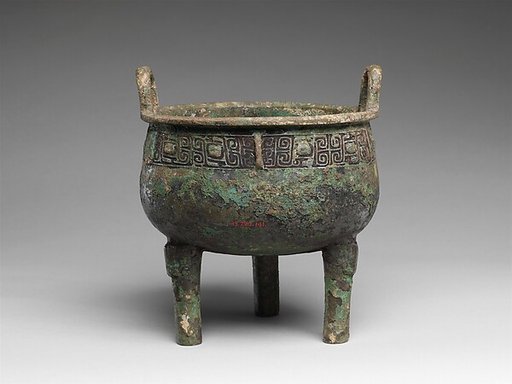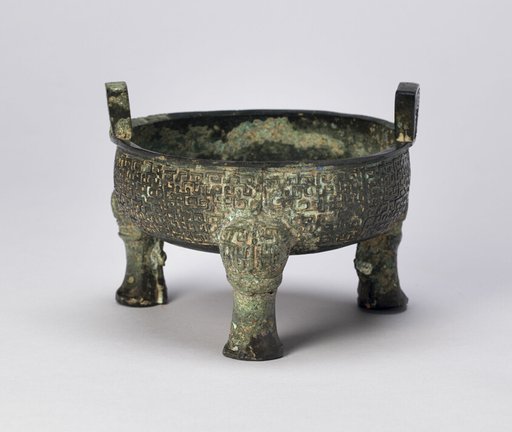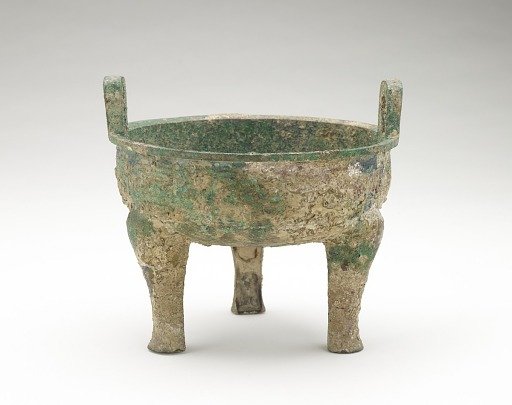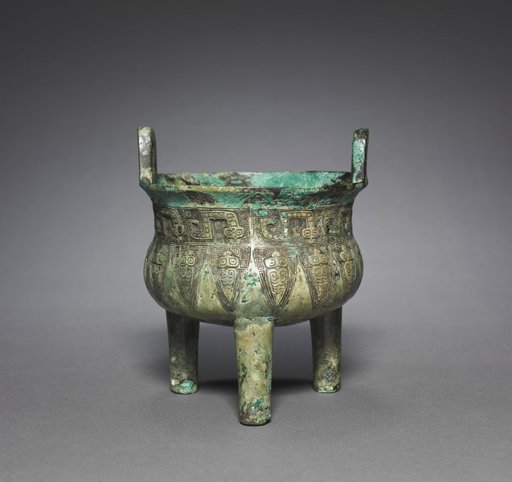
Tripod Cauldron (Ding)
From the collection of Cleveland Museum of Art. Free to download, adapt and use — no permission needed.
In ancient China, bronze tripods of the type called ding were made in sets of different sizes to be used in rituals in which grain and meat was offered to the spirits of the ancestors. These bronzes were subsequently both collected items and major scholarly preoccupations in Chinese history. They were prized art treasures that provide source materials for Chinese historiography and antiquity studies. Catalogues of archaic bronzes have been published since the Song dynasty. Scholars studied the bronze inscriptions, typologies, and terminologies, and these studies exerted an impact in the field well before the birth of modern art history and archaeology.
Cleveland Museum of Art’s own description