Statue of Amenemhat III
From the collection of Cleveland Museum of Art. Free to download, adapt and use — no permission needed.
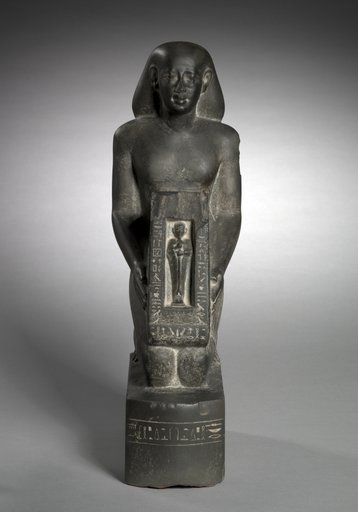
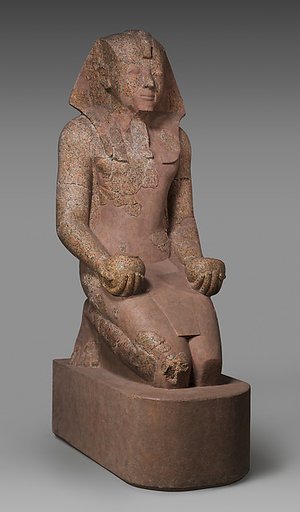
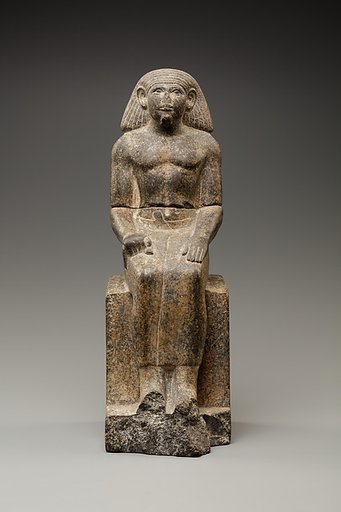
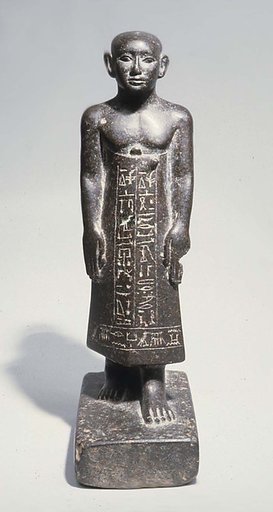
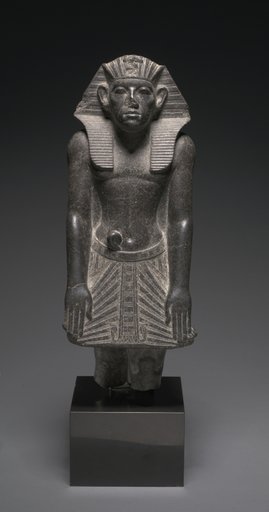
Even though this statue of a king is uninscribed, its distinctive features identify it without any doubt as a portrait of Amenemhat III. The heavy brows, prominent cheekbones, hollow cheeks, jutting lower jaw, and tightly bunched muscles at the corners of the mouth make a strikingly realistic impression. Not realistic, however, are the king’s supersized ears. Instead, they symbolize the ruler’s willingness to hear the prayers of his people. If this image had been carved in relief, the king’s hands would have been uplifted in worship. Here, however, to prevent the breakage of projecting limbs, the ruler’s hands are pressed flat against the front his kilt, a portion of which is looped over his belt.
Cleveland Museum of Art’s own description