CC0 · no rights reserved
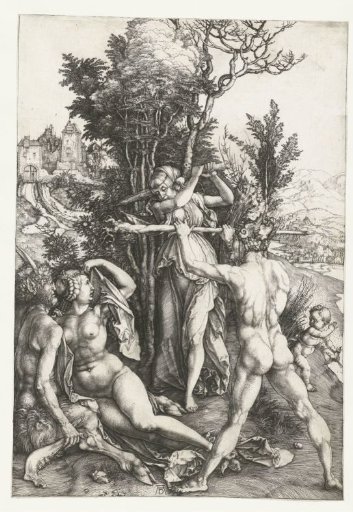
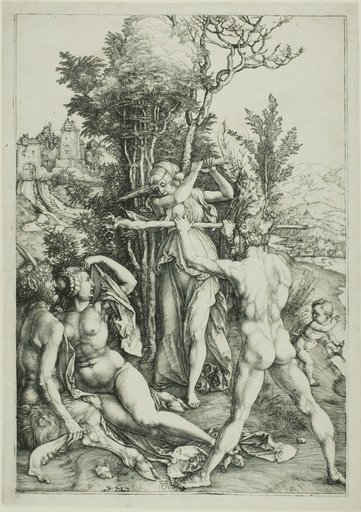
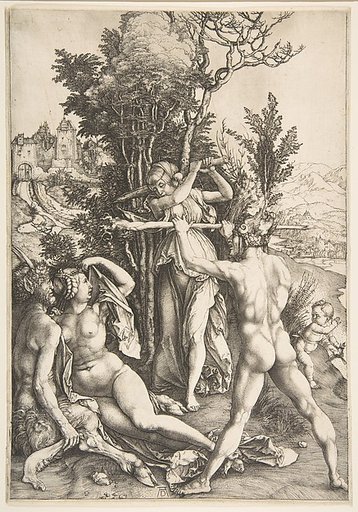
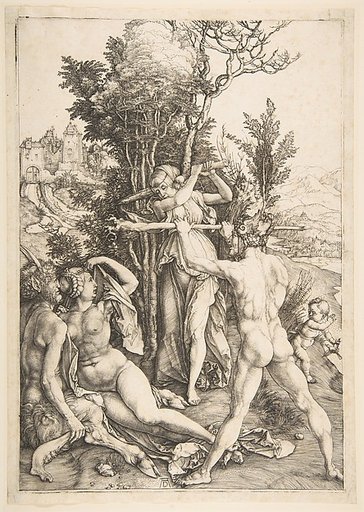
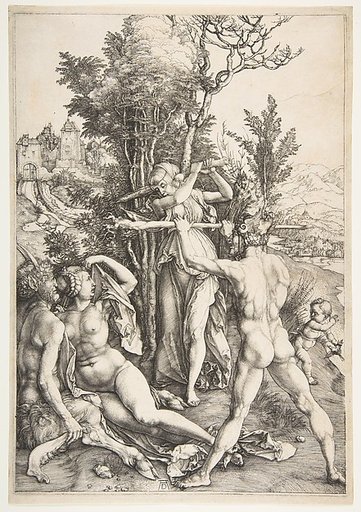
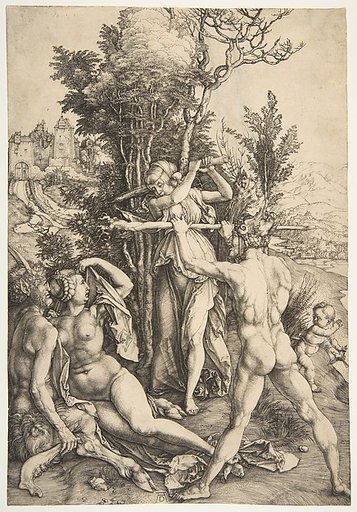
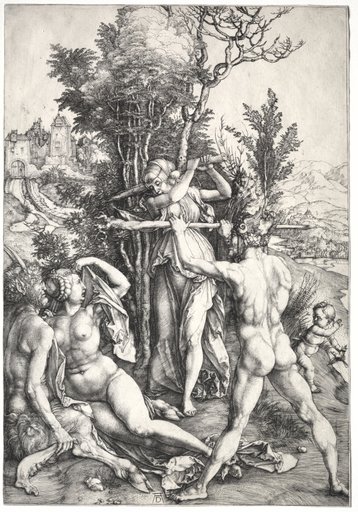
Hercules at the Crossroad
From the collection of Cleveland Museum of Art. Free to download, adapt and use — no permission needed.
About this work
In his journal, Albrecht Dürer referred to this enigmatic engraving as “the Hercules,” but the image is not a typical representation of the mythological hero’s 12 labors. The subject derives from a Greek parable, where Hercules decides between a life of pleasure or one of virtue. The moral dispute plays out here as a battle between two personifications, Virtue, wielding a club, and Pleasure, lying with a satyr. Hercules’s crossroad is a copse of trees between two paths: the ascent to civilization at left (pleasure?), or the winding river to the wilderness at right (virtue?).
Cleveland Museum of Art’s own descriptionCredit lineHercules at the Crossroad, c. 1498. Albrecht Dürer (German, 1471–1528). Engraving; image: 32.4 x 22.2 cm (12 3/4 x 8 3/4 in.); sheet: 32.4 x 22.2 cm (12 3/4 x 8 3/4 in.). The Cleveland Museum of Art, Purchase from the J. H. Wade Fund, 1961.170