Eye
From the collection of Cleveland Museum of Art. Free to download, adapt and use — no permission needed.
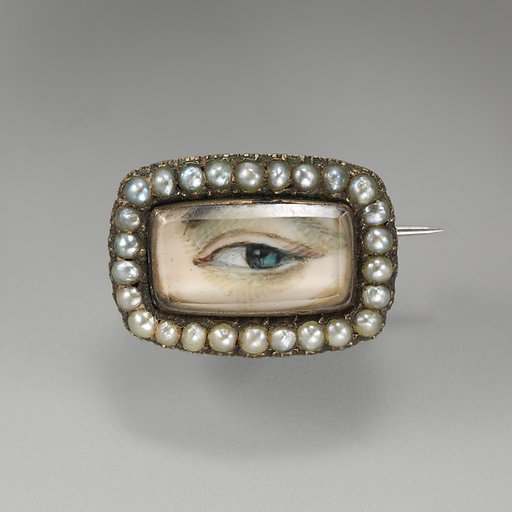
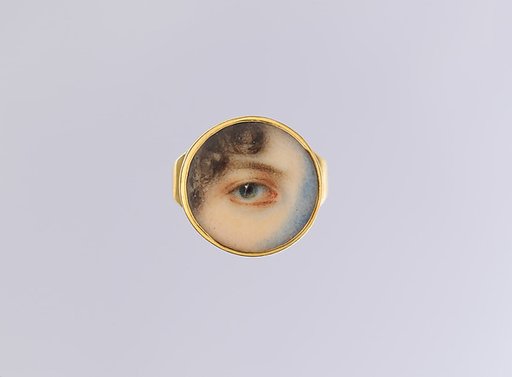
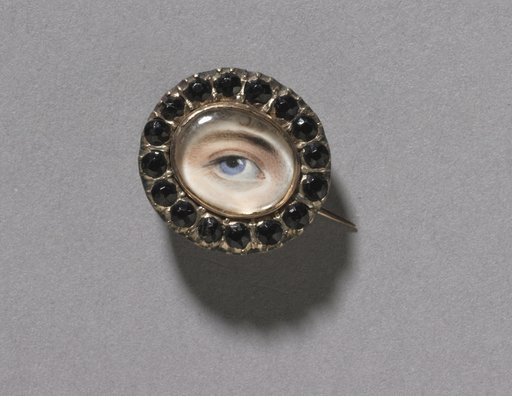
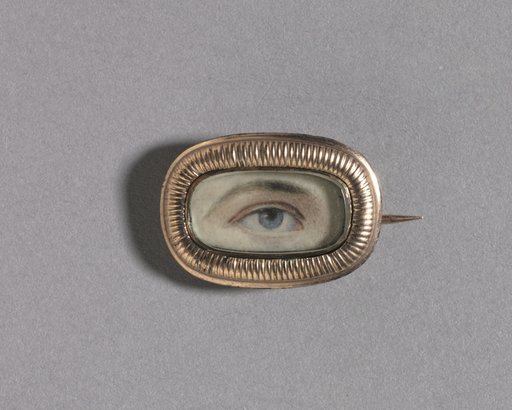
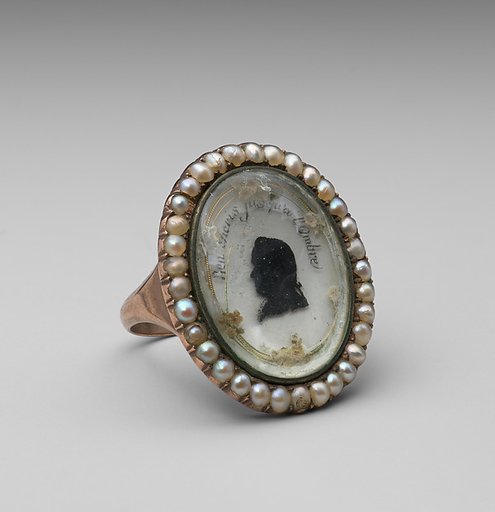
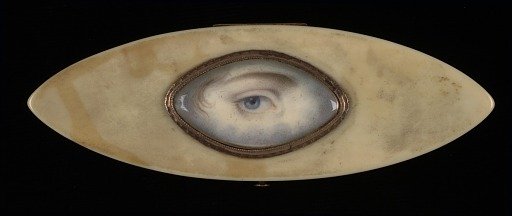
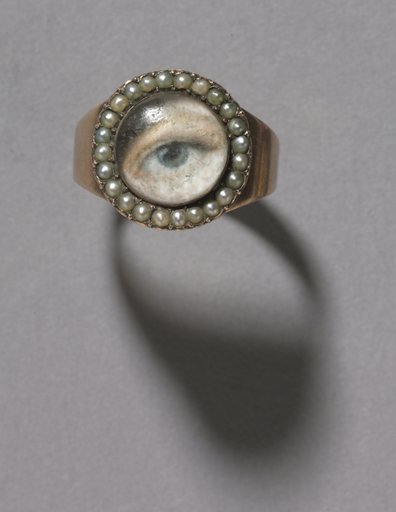
Eye miniatures were popular in Europe between 1790 and 1830. Only in a few extraordinary cases do we know whose eyes were painted and their limited scope makes it almost impossible to identify the artist, though we know that many famous miniaturists painted eye portraits including John Smart, Richard Cosway, and George Engleheart. Because the artist and the sitter could be known only to the person who commissioned or received the object, these eyes are distinguished from miniatures and portraits for their private significance and insurmountable mystery. There are six eye miniatures in the Cleveland Museum of Art's collection, but this is the only ring. It was probably worn by a woman, but we do not know if the eye belonged to a male or female. Eye miniatures are often set in highly elaborate jeweled frames that balance their simplicity and emphasize their preciousness. The pearls, with a spherical luster that recalls tears, suggest that this was a mourning ring—expressing grief for a lost loved one. Pearls were not cultured until the 1900s, and were highly valued during the 1800s when this was probably painted, making the ring both sentimental and valuable to its owner. In 2000 three of the CMA's eye miniatures appeared in an exhibition on Alfred Hitchcock and art, highlighting their eerie fascination for modern viewers and their relationship to Surrealism and issues of surveillance.
Cleveland Museum of Art’s own description