CC0 · no rights reserved
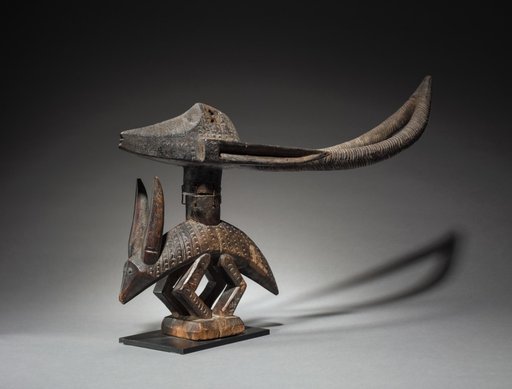
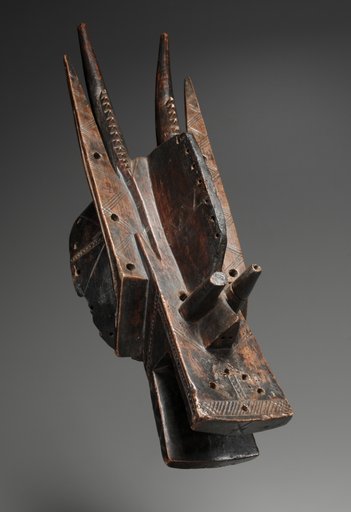
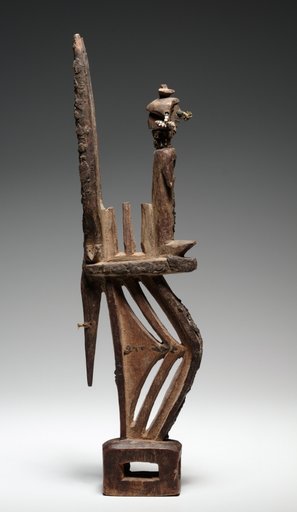
Headdress (chi wara)
From the collection of Cleveland Museum of Art. Free to download, adapt and use — no permission needed.
About this work
Chi wara —a mythical “farming beast”—was said to teach farming to the Bamana people. Carved patterns cover this female chi wara’s body, highlighting its muscles and emphasizing that it is no earthly animal, but rather an agricultural spirit that combines human, antelope, and anteater elements. This example emphasizes vertical space, with a kneeling human figure on the back. The figure is adorned with imported beads as well as small shells. Accompanied by women’s songs, male performers danced paired male-and-female chi wara headdresses affixed to basketry caps at agricultural competitions and weddings.
Cleveland Museum of Art’s own descriptionCredit lineHeaddress (chi wara), early 1900s. Wood, metal, glass beads, seashells, string, and probably tar; overall: 45.2 x 4.8 x 12.4 cm (17 13/16 x 1 7/8 x 4 7/8 in.). The Cleveland Museum of Art, Gift of Katherine C. White, 1962.307