CC0 · no rights reserved
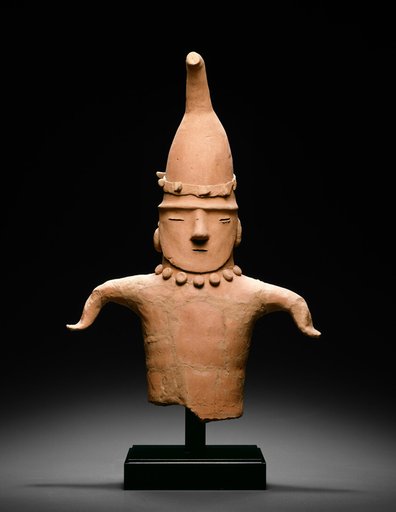
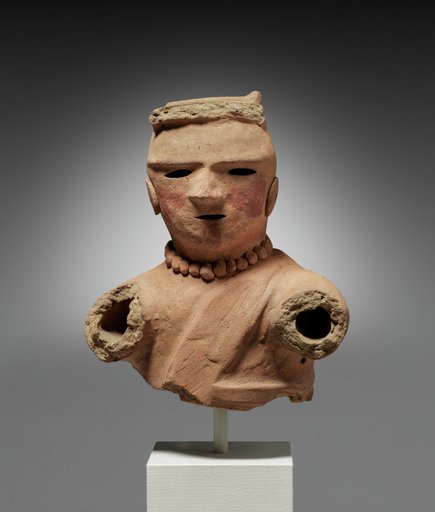
Haniwa Figure of a Female
From the collection of Cleveland Museum of Art. Free to download, adapt and use — no permission needed.
About this work
Figures in a variety of dress including military and ceremonial garb start to appear on Japanese earthen mounded tombs called old mounds ( kofun ) from the 400s to 500s CE. This fragment depicts a woman with red triangles on her face and wearing jewelry. Archaeologists speculate that the facial markings had a ritual or symbolic function, perhaps indicating she is a female shaman. Many figures of this kind have been found in digs in the Kanto region of eastern Japan. We can only guess at the meaning of the clay cylinders called haniwa .
Cleveland Museum of Art’s own descriptionCredit lineHaniwa Figure of a Female (巫女形埴輪), 500s. Japan, Kofun period (300–710 CE). Earthenware with traces of pigment; overall: 58.4 x 30.5 cm (23 x 12 in.). The Cleveland Museum of Art, James Parmelee Fund by exchange, 1962.39