CC0 · no rights reserved
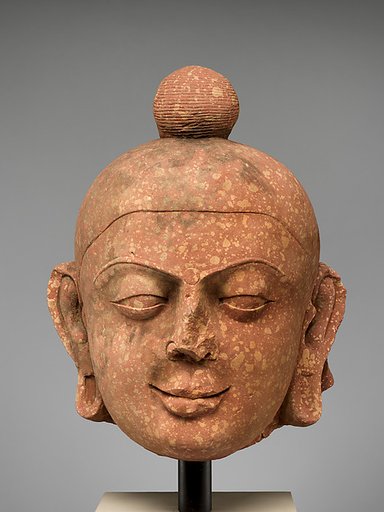
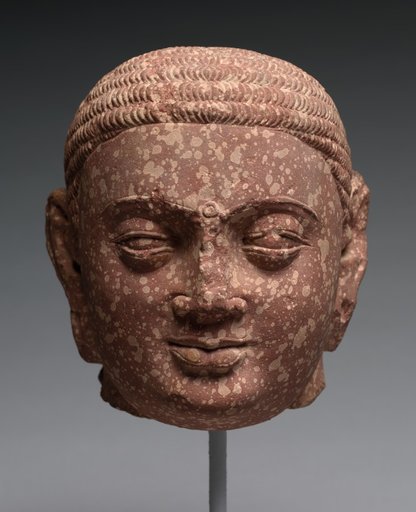
Head of Jina
From the collection of Cleveland Museum of Art. Free to download, adapt and use — no permission needed.
About this work
The short rows of hair show the new growth after this figure pulled out every lock by hand. Such a radical act demonstrated renunciation from a society that dictated the wearing of long hair to be covered by a turban. Since there is no protrusion at the top of the head, he can be recognized as a Jina, rather than a Buddha or other holy man. His slight smile and placid alert gaze communicate the power, bliss, and wisdom of one who has reached a state of pure knowing and liberation from delusions.
Cleveland Museum of Art’s own descriptionCredit lineHead of Jina, c. 150–75 CE. India, Mathura, Kushan period. Red mottled sandstone; overall: 21.6 x 18.3 cm (8 1/2 x 7 3/16 in.). The Cleveland Museum of Art, Purchase from the J. H. Wade Fund, 1962.47