Tomb Relief of the Chief Physician Amenhotep and Family
From the collection of Cleveland Museum of Art. Free to download, adapt and use — no permission needed.
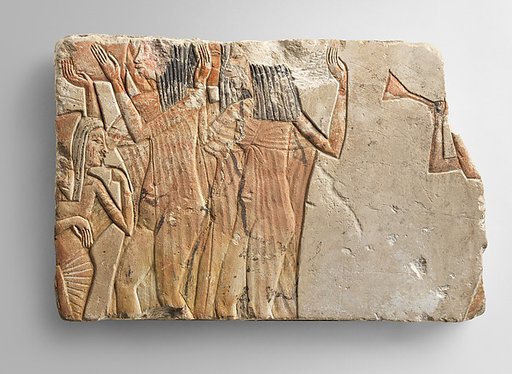
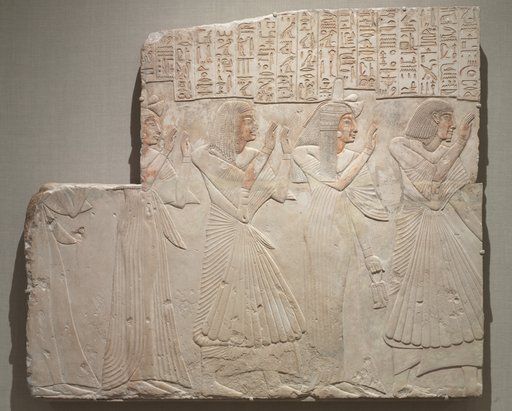
Ancient Egyptian medicine was held in high esteem, and doctors made a good living. In this scene, the chief physician Amenhotep leads his family in prayer. Arms uplifted in worship, they all wear intricately styled wigs and elaborately layered, pleated, billowing linen garments that were the height of fashion during the long and prosperous reign of Ramesses II. The faces have features typical of this period, including a long-nosed profile with small mouths and creases on the neck. Only the upper eyelids were modeled in relief; other details of the eyes were added in black and white paint. Amenhotep’s tomb chapel at Asyut was excavated in 1913–14 by the Egyptian Antiquities Service. Its reliefs are now divided among four cities. The right side of the wall directly adjoining the Cleveland relief is in Zurich, Switzerland. The other sections are in the Toledo Museum of Art and the Egyptian Museum, Berlin, Germany.
Cleveland Museum of Art’s own description