CC0 · no rights reserved
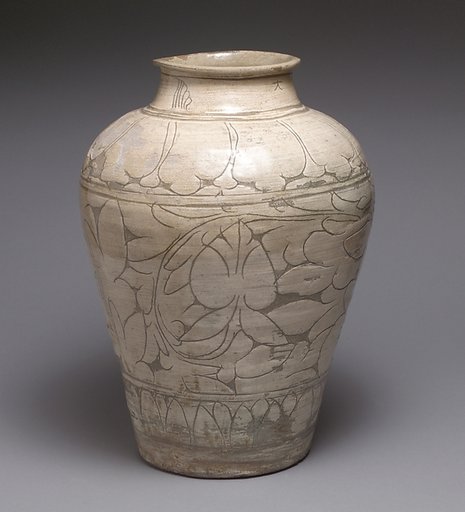
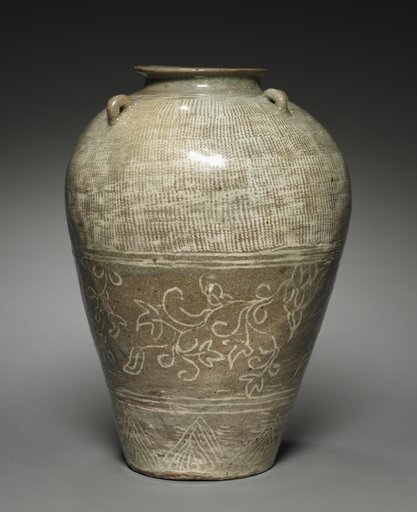
Jar with Scroll Design
From the collection of Cleveland Museum of Art. Free to download, adapt and use — no permission needed.
About this work
In premodern Korea, a newborn baby’s umbilical cord and placenta were believed to be a symbol of the life force of the fetus and thus kept in a specially arranged burial site. This jar was made exclusively for burying a placenta, a custom practiced by aristocratic families in Korea in the belief that it would bring happiness to the child.
Cleveland Museum of Art’s own descriptionCredit lineJar with Scroll Design (분청사기 상감 당초무늬 호 [粉靑沙器象嵌唐草文壺]), 1400s. Korea, Joseon dynasty (1392–1910). Buncheong ware with incised, stamped, and slip-inlaid decoration; height: 37.6 cm (14 13/16 in.); outer diameter: 27 cm (10 5/8 in.). The Cleveland Museum of Art, John L. Severance Fund, 1963.505