CC0 · no rights reserved
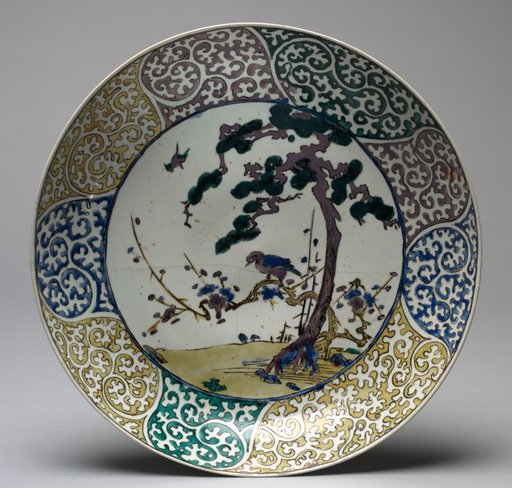
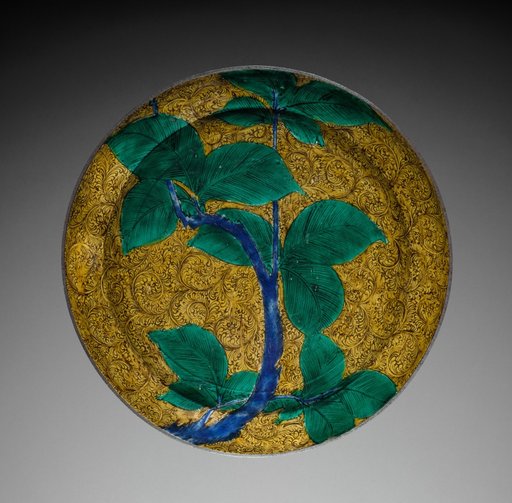
Large Dish with Persimmon Branch
From the collection of Cleveland Museum of Art. Free to download, adapt and use — no permission needed.
About this work
This large plate is considered to have been produced in Kyushu, and is in a palette of Ko-Kutani style works called aode (literally, bluish-green hand) for the deep blue, green, purple, and yellow overglaze enamels that completely cover their surfaces. Ko-Kutani means “old Kutani,” and can refer to two kinds of porcelains. One kind is said to have been produced in the village of Kutani in present-day Ishikawa prefecture in the mid-1600s through the early 1700s. The other kind, decorated with similar glazes and designs, was produced in the former Arita domain of present-day Saga prefecture in Kyushu.
Cleveland Museum of Art’s own descriptionCredit lineLarge Dish with Persimmon Branch (色絵柿の枝図平鉢), mid- to late 1600s. Japan, Edo period (1615–1868). Porcelain with underglaze black and overglaze enamel (Hizen ware, Ko-Kutani style); diameter: 33.4 cm (13 1/8 in.); height: 6.2 cm (2 7/16 in.). The Cleveland Museum of Art, Severance and Greta Millikin Collection, 1964.245