CC0 · no rights reserved
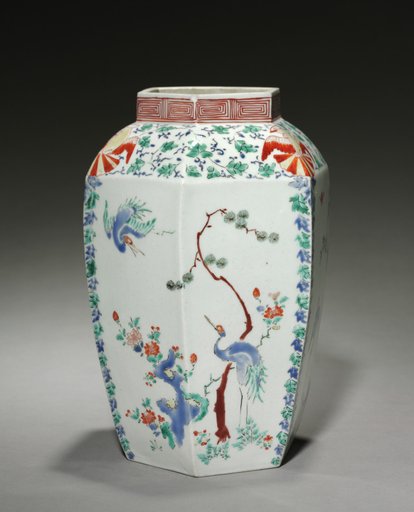
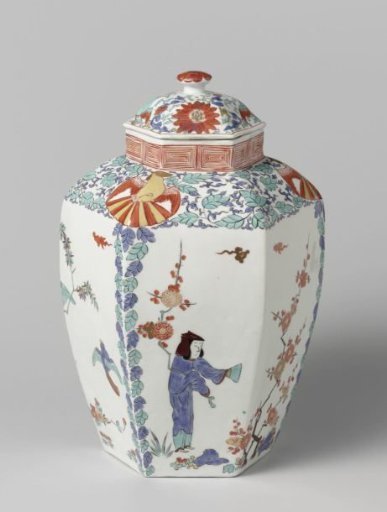
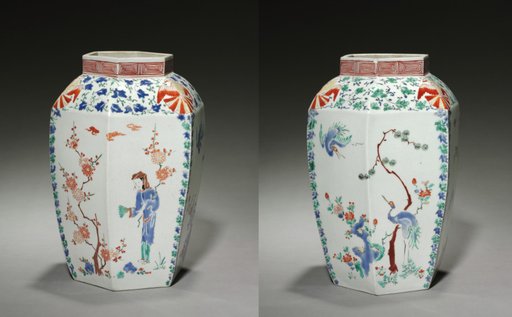
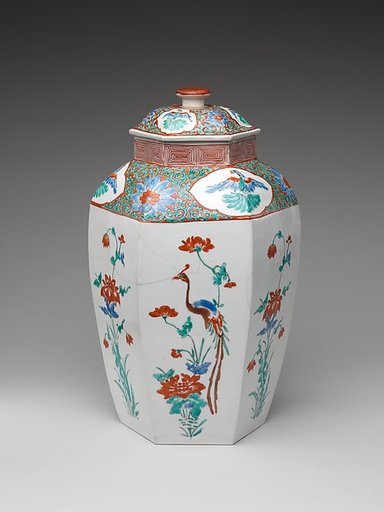
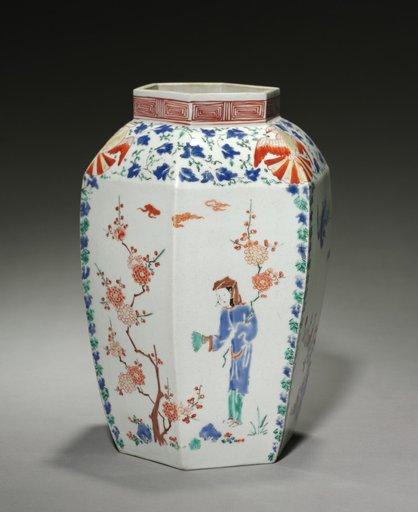
Hexagonal Jar
From the collection of Cleveland Museum of Art. Free to download, adapt and use — no permission needed.
About this work
This kakiemon-type jar with plum design is a product made for the European markets. Here, Japanese kakiemon potters transformed the typical plum, bamboo, and pine motifs into a theme appreciating the plum. The 9th-century Japanese scholar and politician Sugawara Michizane established the plum as a symbol of scholarship. An excellent poet, particularly of Chinese-style poetry, he was also well known for his love of plum blossoms. Later, the plum came to represent tenmangu, a shrine for Sugawara.
Cleveland Museum of Art’s own descriptionCredit lineHexagonal Jar, late 1600s. Japan, Edo period (1615–1868). One of a pair; porcelain with overglaze color enamel and gold decoration (Hizen ware, Kakiemon type); overall: 26.8 x 18.6 cm (10 9/16 x 7 5/16 in.). The Cleveland Museum of Art, Severance and Greta Millikin Collection, 1964.273.1