CC0 · no rights reserved
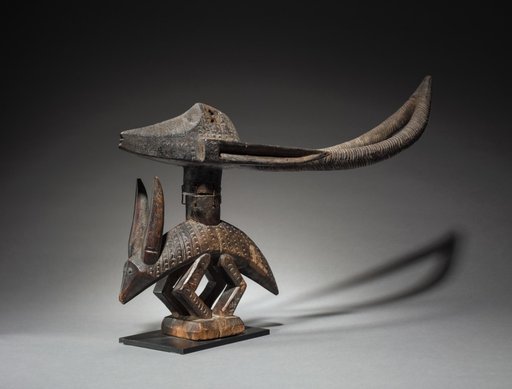
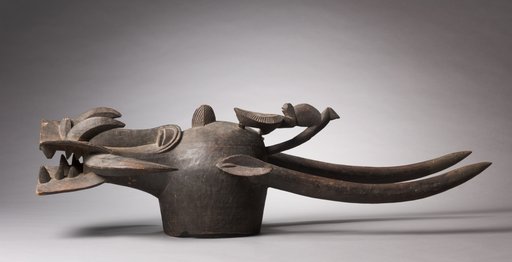
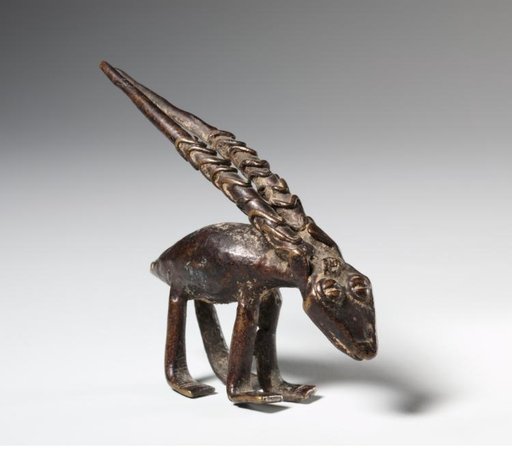
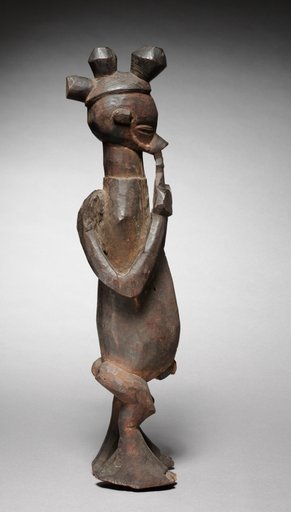
Headdress (chi wara)
From the collection of Cleveland Museum of Art. Free to download, adapt and use — no permission needed.
About this work
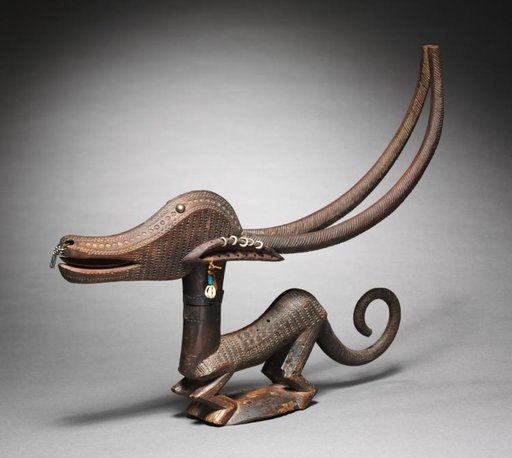
Chi wara —a mythical “farming beast”—was said to teach farming to the Bamana people. Carved patterns cover this female chi wara’s body, highlighting its muscles and emphasizing that it is no earthly animal, but rather an agricultural spirit that combines human, antelope, and anteater elements. This example wears earrings and a nose ring of imported metals and beads. Its carver—a blacksmith—used a naturalistic style common south of the city of Bamako. Accompanied by women’s songs, male performers danced paired male-and-female chi wara headdresses affixed to basketry caps at agricultural competitions and weddings.
Cleveland Museum of Art’s own descriptionCredit lineHeaddress (chi wara), early to mid-1900s. Africa, West Africa, Mali, Bamana-style blacksmith-carver. Wood, cowrie shells, glass beads, possibly aluminum, iron alloy, upholstery studs, and natural fibers; overall: 44.5 x 66 cm (17 1/2 x 26 in.). The Cleveland Museum of Art, Gift of Mrs. Ralph M. Coe in memory of Ralph M. Coe, 1965.325