CC0 · no rights reserved
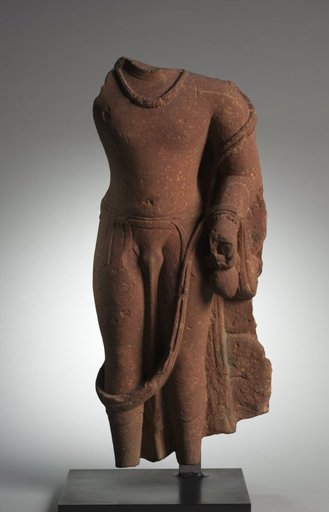
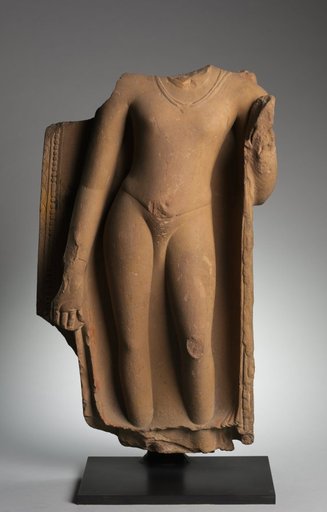
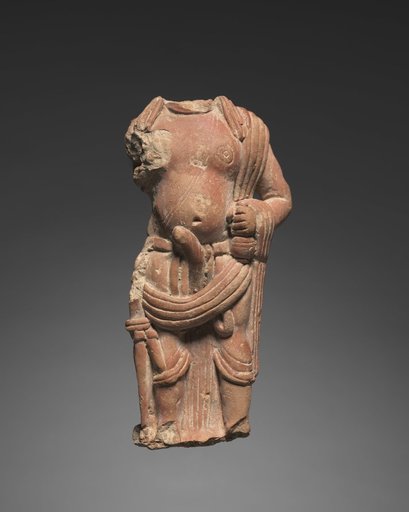
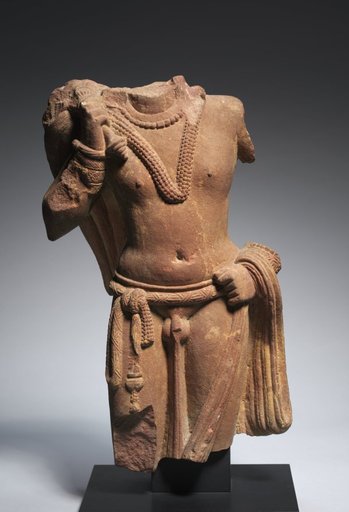
Attendant Bearing a Fly Whisk (Chauri)
From the collection of Cleveland Museum of Art. Free to download, adapt and use — no permission needed.
About this work
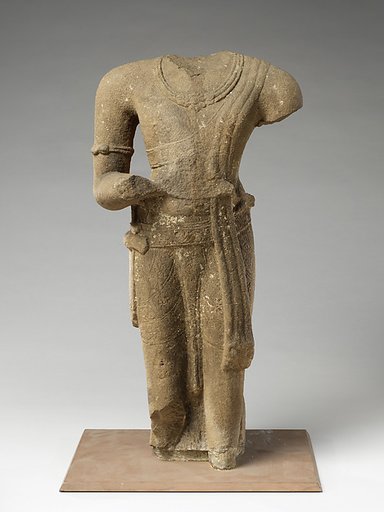
This figure would have been one of two flanking a king, the Buddha, or other royal or holy figure. The relaxed stance indicates that he is an attendant, rather than a central icon. Early depictions of the Buddha in India frequently have images of chauri -bearers on either side. They are identifiable as nature divinities called yakshas during this period, but in later periods the Buddha's attendants can be recognized as specific bodhisattvas, who are beings on the path to enlightenment.
Cleveland Museum of Art’s own descriptionCredit lineAttendant Bearing a Fly Whisk (Chauri), c. 100–150 CE. Northern India, Uttar Pradesh, Mathura, Kushan period. Red sandstone; overall: 55.8 cm (21 15/16 in.). The Cleveland Museum of Art, Andrew R. and Martha Holden Jennings Fund, 1965.472