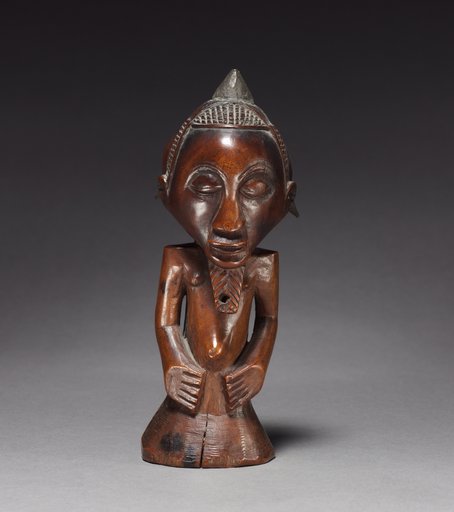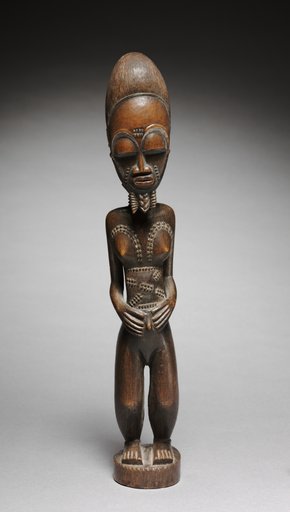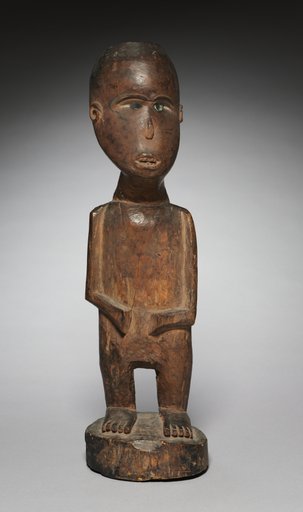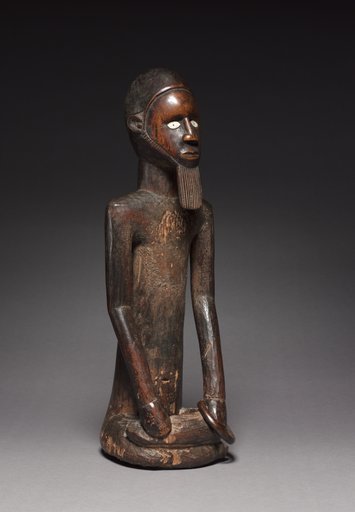
Shrine Figure (misi or mishi)
From the collection of Cleveland Museum of Art. Free to download, adapt and use — no permission needed.
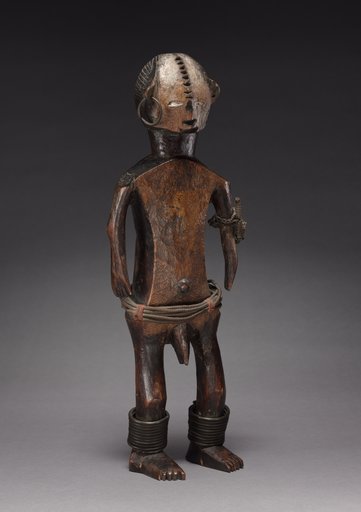
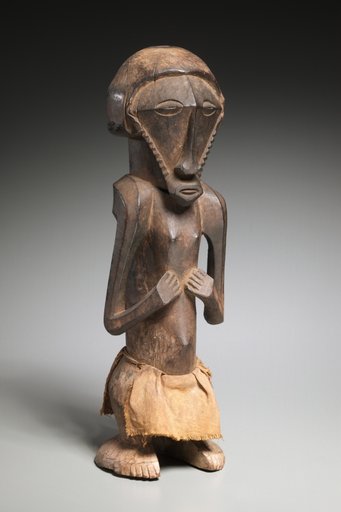
The scale and attributes of this figure suggest it represents an important male ancestor. It wears a e'umbu skullcap like members of the politically and ritually powerful Bwami association. The slender nose that descends into a sharp point was an admired form called membe wa atondo . This figure was used in an ancestral cult dedicated to the founders of small political groupings. Such figures were usually kept in the same shrine with several stylistically related male and female carvings representing ancestors. At times of crisis, the shrine's custodian spent the night near the images, bringing offerings to the ancestors in exchange for their support.
Cleveland Museum of Art’s own description