Carving
From the collection of Cleveland Museum of Art. Free to download, adapt and use — no permission needed.
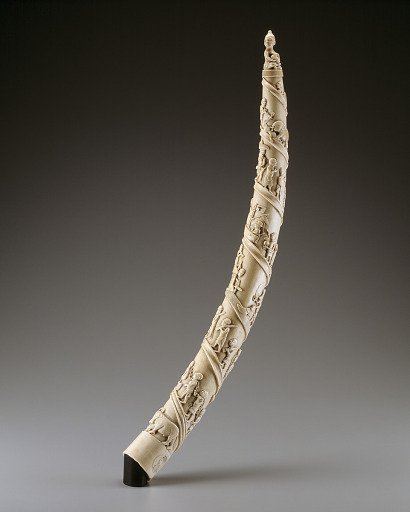
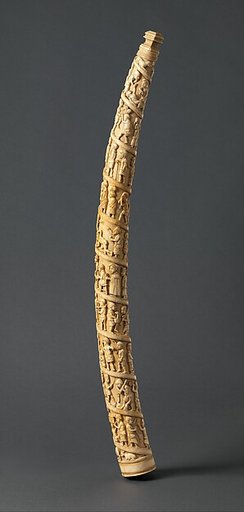
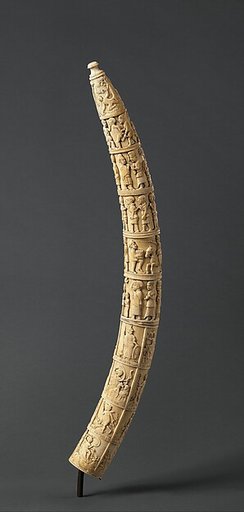
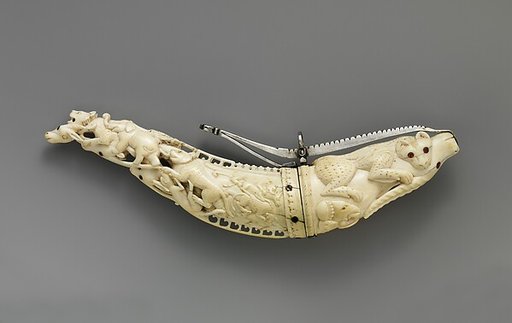
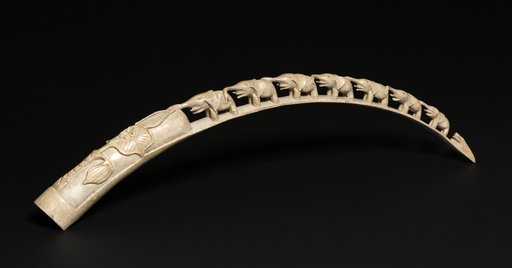
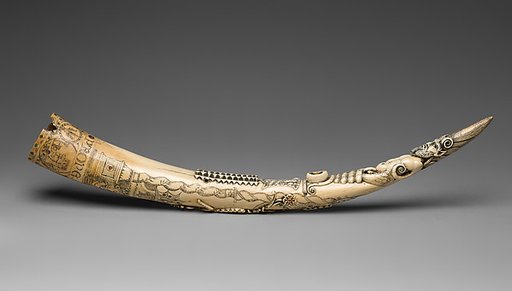
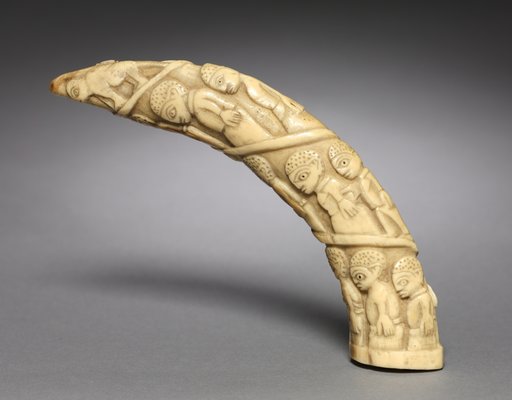
Carved elephant ivory tusks and hippopotamus tooth ivory—whether large, or small, like this example—were sought-after souvenirs for Europeans who visited, lived, or worked on the coast of Central Africa. Vili carvers had been sculpting ivory for centuries. In the age of European commerce and colonialism, they created carefully observed tusks with representations of everyday life for European clients. While commissions, they also reflected what the artists chose to represent about their own societies, and sometimes about Europeans. In this small tusk, we see Congolese individuals wearing various clothing, from local-style waist wrappers to European brimmed hats.
Cleveland Museum of Art’s own description