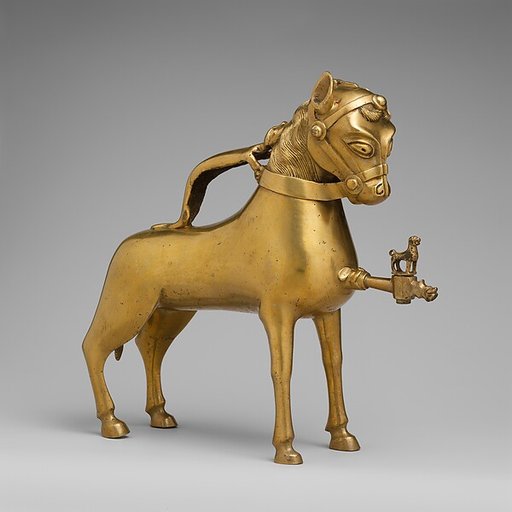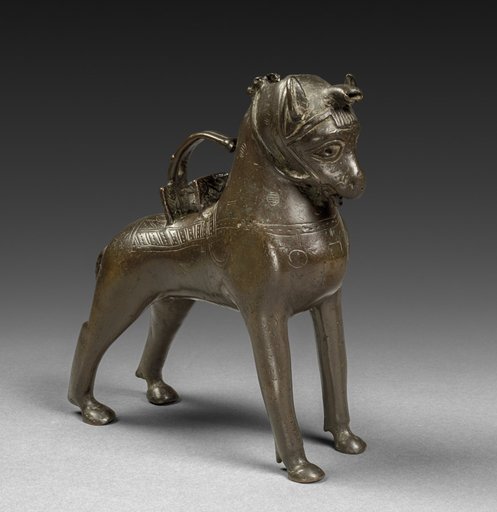
Aquamanile: Saddled Horse
From the collection of Cleveland Museum of Art. Free to download, adapt and use — no permission needed.
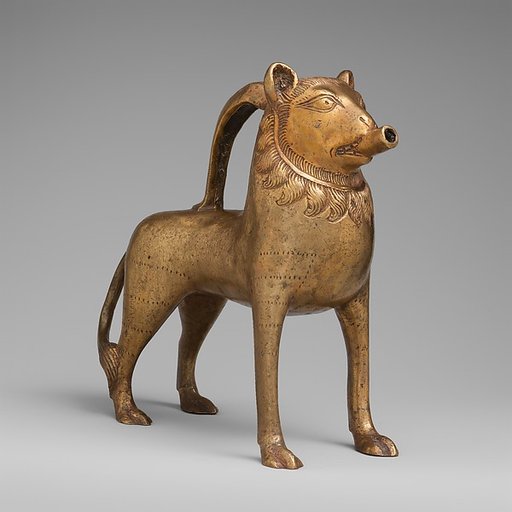
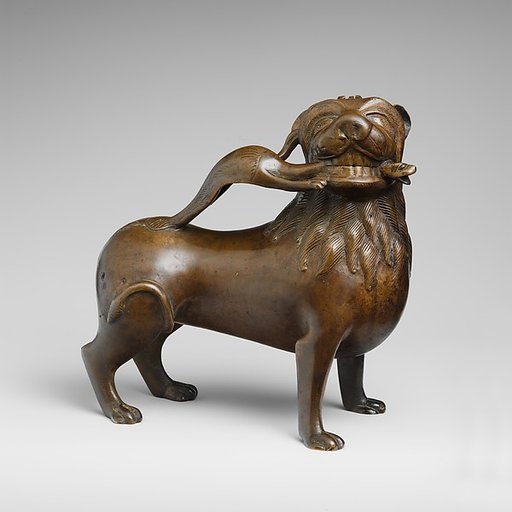
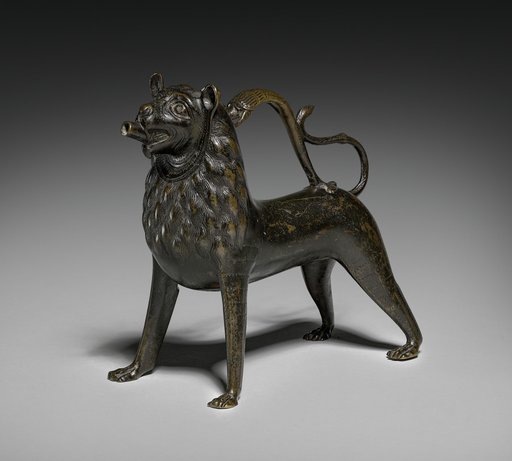
Aquamanilia, from the Latin aqua meaning water and manus meaning hands, were hollow cast vessels used for hand washing. Although originally intended for liturgical use they became a common sight in the homes of the nobility in the 1200s and 1300s. Often filled with scented water, these vessels were used to wash hands just before and after eating a meal. An accompanying catch basin would have caught the water as it was being poured. Here we see a proud and alert dappled gray warhorse, highly prized in the medieval period. The saddled but riderless form is rare; other popular aquamanilia include lions, dragons, griffins, and human heads.
Cleveland Museum of Art’s own description