CC0 · no rights reserved
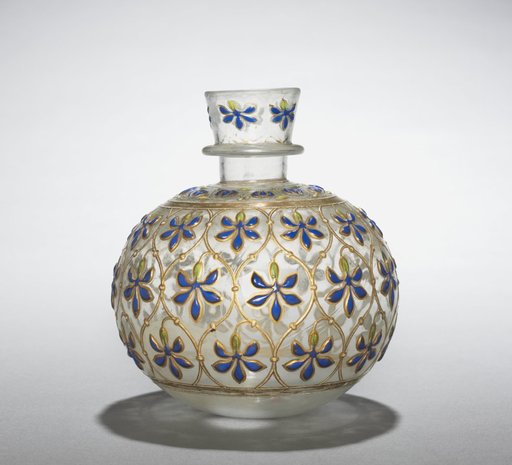
Hookah Base
From the collection of Cleveland Museum of Art. Free to download, adapt and use — no permission needed.
About this work
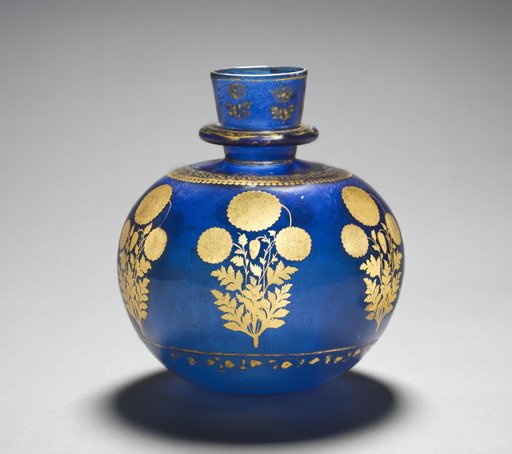
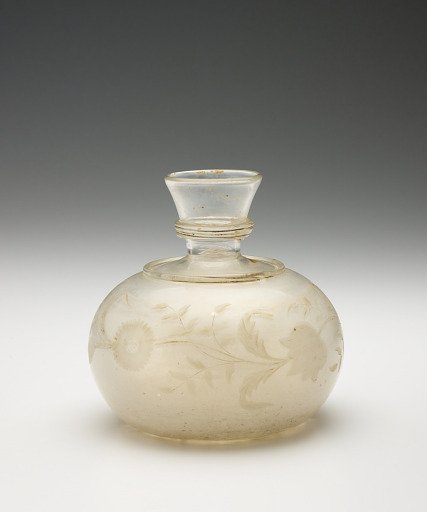
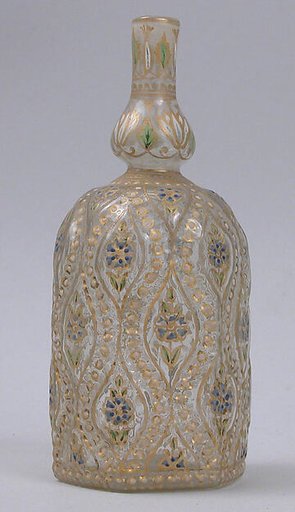
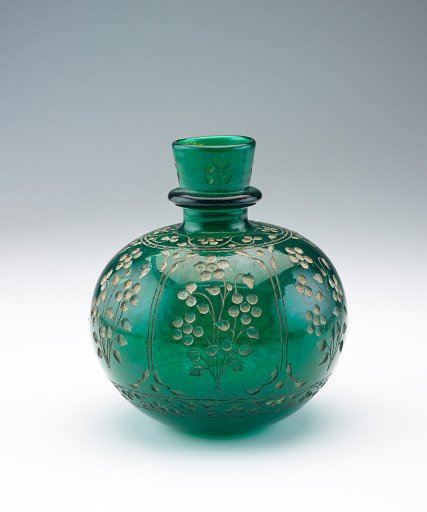
Smoking tobacco was introduced to the Mughal court from Iran in the very early 1600s and soon became popular. This base formed part of a hookah, or water pipe, which consisted of a base that held water—sometimes perfumed with herbs or fresh fruit—a detachable bowl to hold tobacco, and a long tube. Early hookahs used existing vessels for bases, including coconut shells. By the late 1600s or early 1700s, richly decorated pieces like this were produced. The jewel-like decoration of blue and green blossoms evokes a garden in which a smoker might have sat.
Cleveland Museum of Art’s own descriptionCredit lineHookah Base, early 1700s. India, Mughal Dynasty (1526-1756). Glass with colored enamel and gilding; overall: 17.8 cm (7 in.). The Cleveland Museum of Art, The Norweb Collection, 1969.286