Li Taibo
From the collection of Cleveland Museum of Art. Free to download, adapt and use — no permission needed.
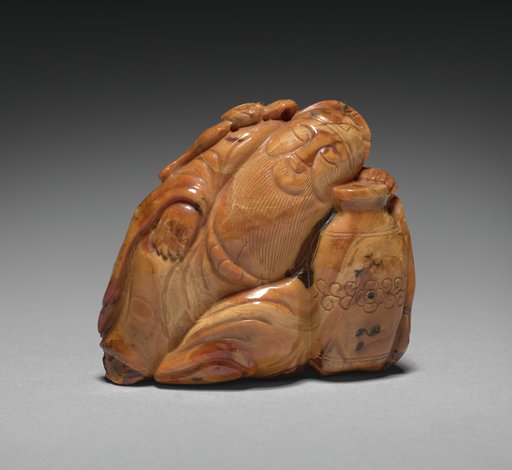
This piece of ochre amber is carved in the round in the form of Li Bai 李白 (701–762), also known as Li Taibai or Li Taibo, 李太白. He was a poet in the golden age of Chinese poetry. Around a thousand poems are attributed to him. Li’s eyes are closed, an arm wrapped around his wine jar, in a drunken sleep. Perched on his shoulder is a bat, considered a lucky symbol as the Chinese word for bat, 蝠 fú, is pronounced the same as “good fortune” 福. Deer, like the one nestled behind Li, traditionally symbolize longevity and prosperity. These auspicious symbols create a bittersweet contrast with the legendary story that Li drowned while drunk when reaching to grasp the moon's reflection in the river.
Cleveland Museum of Art’s own description