Ganesha
From the collection of Cleveland Museum of Art. Free to download, adapt and use — no permission needed.
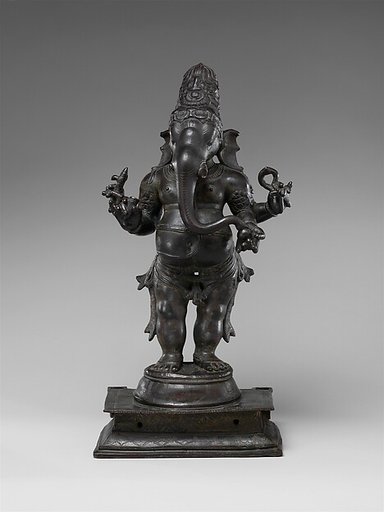
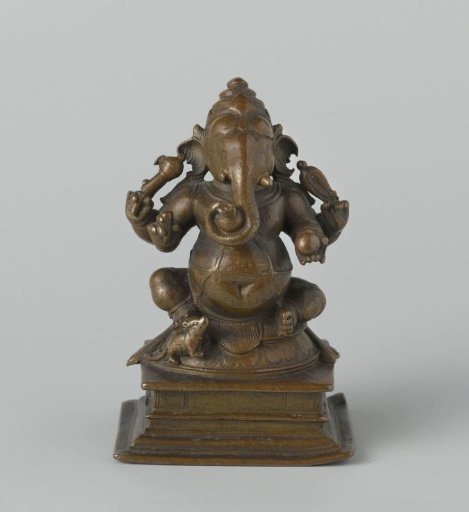
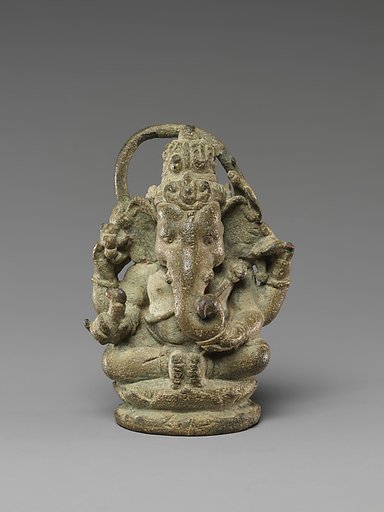
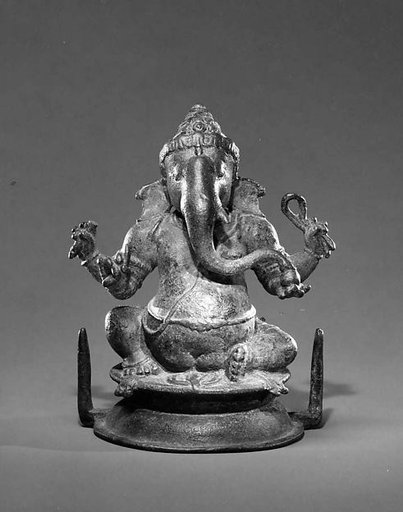
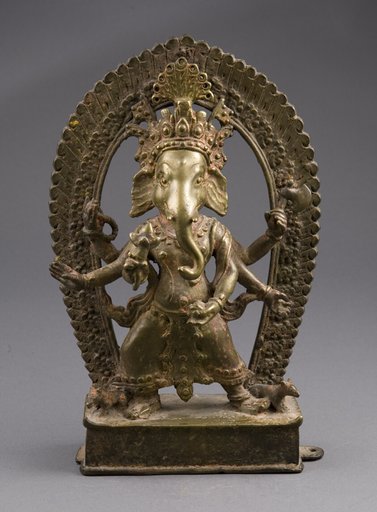
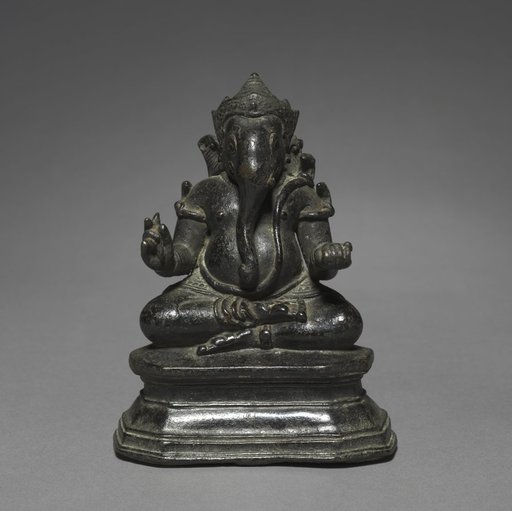
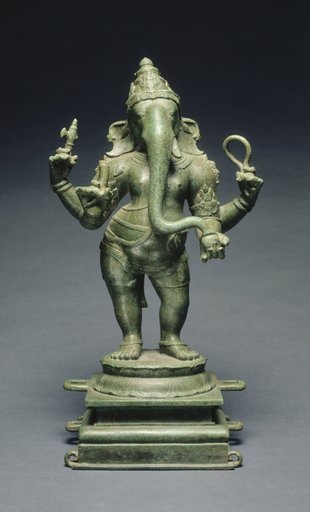
Ganesha, the god of wealth and abundance, is an auspicious and revered Hindu deity. He removes obstacles and protects his worshipers. Numerous myths explain how Ganesha became an elephant-man composite, but the most popular version relates the story of how he was decapitated by his enraged father, Shiva, and restored to life through the intervention of his mother, Parvati. Shiva agreed to revive him with the head of the first creature encountered: an elephant. Ganesha's strength—his profound spiritual wisdom—contrasts with his weakness for sweets, as indicated by his pudginess and the sweet modaka he carries. In Ganesha, opposing forces exist in perfect harmony.
Cleveland Museum of Art’s own description