Vajrapani
From the collection of Cleveland Museum of Art. Free to download, adapt and use — no permission needed.
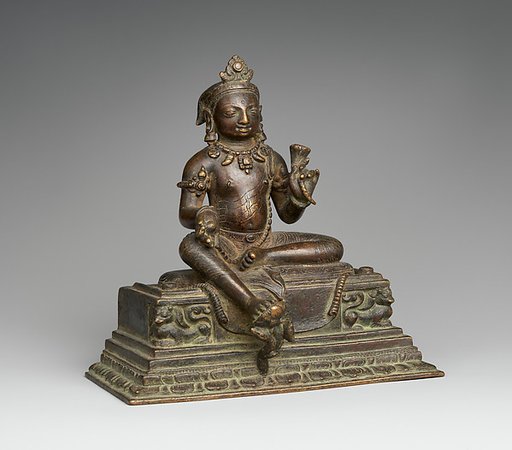
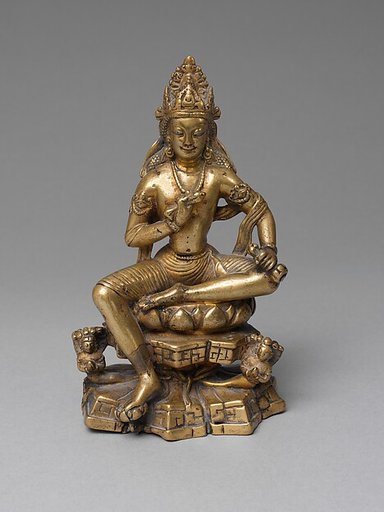
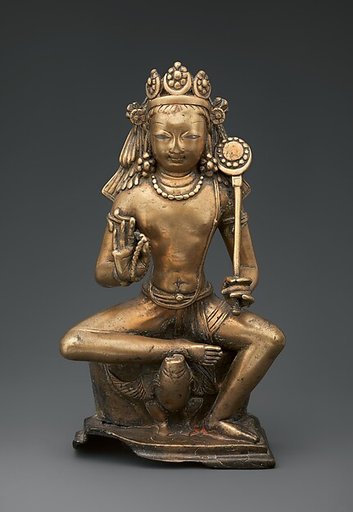
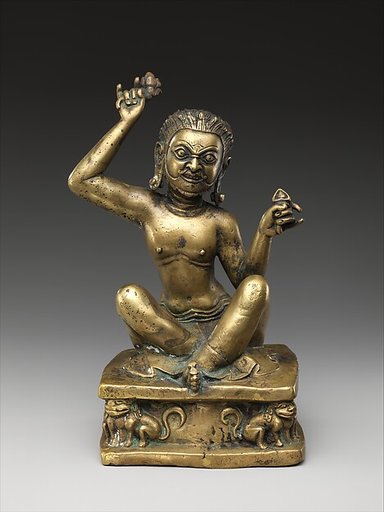
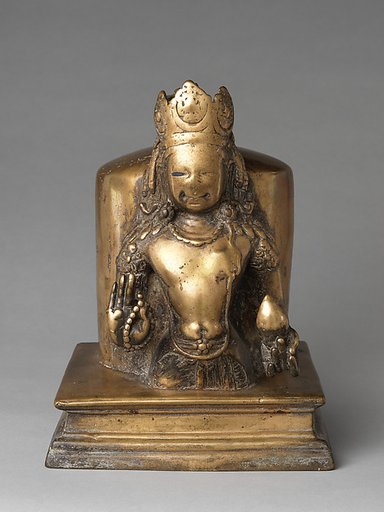
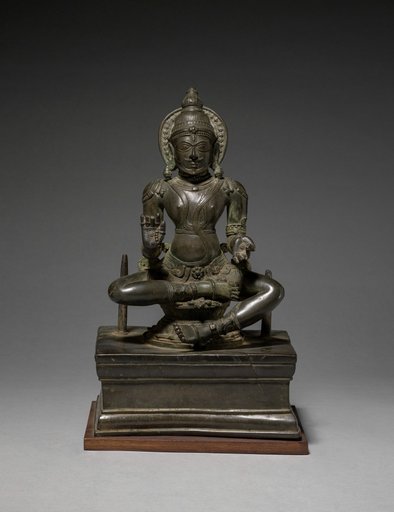
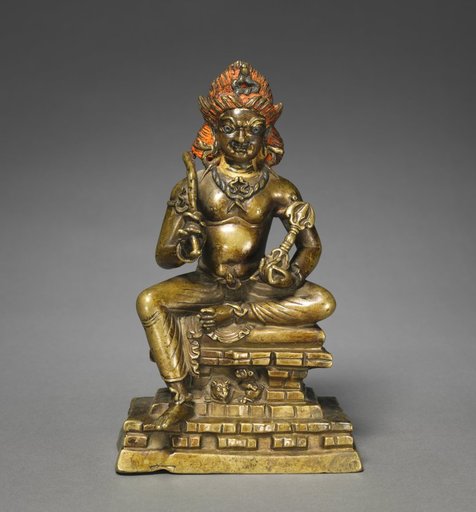
The name Vajrapani means “he who holds (pani) the thunderbolt (vajra)” in Sanskrit. Adopted by Buddhists as a protector not only in India and the Himalayan regions of Nepal and Tibet, Vajrapani also was incorporated into art of China, Korea, and Japan. The attributes of the thunderbolt and the club were derived from images of Zeus and Hercules that travelers from the Mediterranean world brought to the region as early as the 320s BC. This rare, early bronze image of Vajrapani visually conveys his power to overcome fear and obstacles to enlightenment, and for this reason he is invoked by Buddhist practitioners. He sits on a pedestal in the form of a rocky mountain populated with wild lions, and he has tamed poisonous snakes to use as ornaments.
Cleveland Museum of Art’s own description