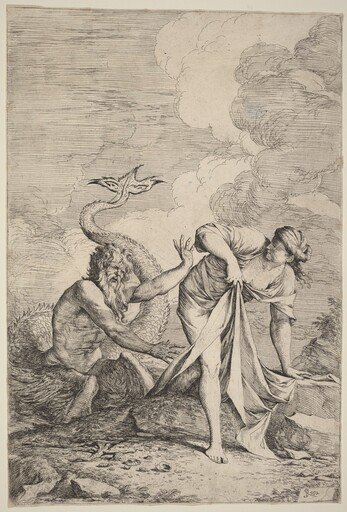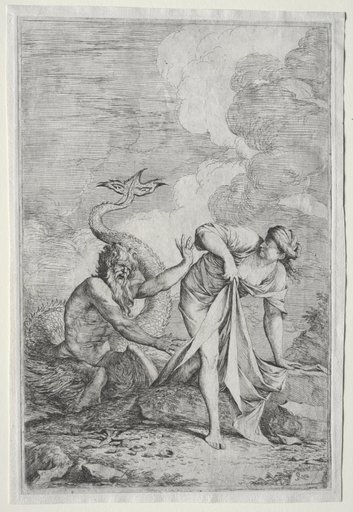
Glaucus and Scylla
From the collection of Cleveland Museum of Art. Free to download, adapt and use — no permission needed.
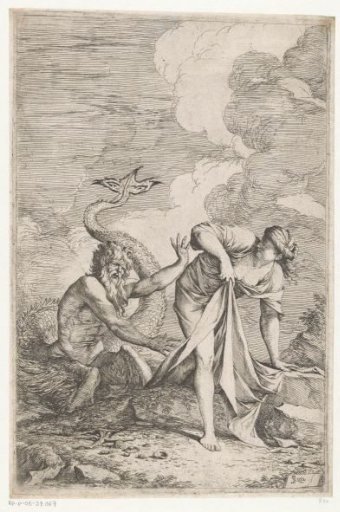
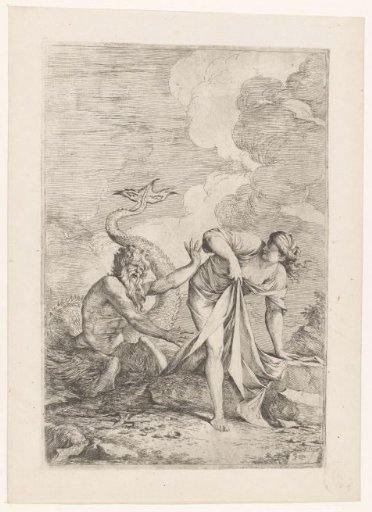
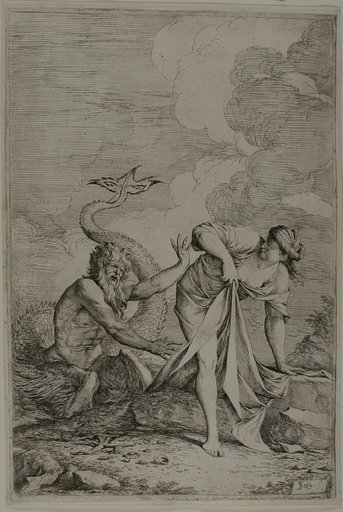
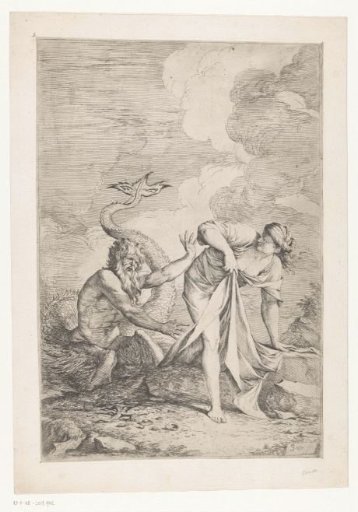
Salvatore Rosa was a prolific and skilled printmaker, producing more than 100 etchings throughout his career. Derived from Ovid's Metamorphoses , Glaucus and Scylla tells a story associated with magic and witchcraft. After drinking a magical herb, the fisherman Glaucus was immortalized and transformed into a sea god with fins and a fish tail. Rosa depicts the moment in which the amorous Glaucus declares his love to the beautiful water nymph, Scylla, who flees. Later, Glacus implored the witch Circe to help him win the heart of Scylla, but attracted to the sea god herself, the jealous witch poisoned the waters where Scylla lived, turning the nymph into the infamous rock that troubled Ulysses and countless sea travelers. The ominous, rolling clouds and Glaucus's thrashing form project the drama of Scylla's escape and foreshadow her own metamorphosis to come.
Cleveland Museum of Art’s own description