White-Robed Guanyin
From the collection of Cleveland Museum of Art. Free to download, adapt and use — no permission needed.
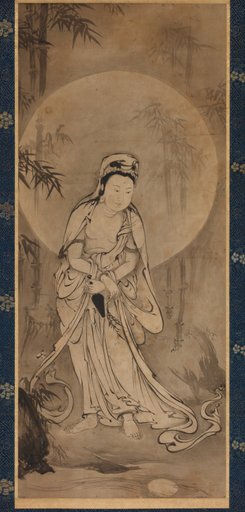
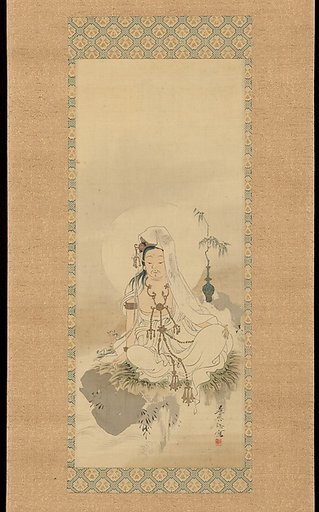
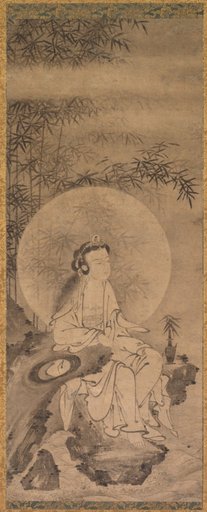
The figure here sits on a rocky elevation representing Potalaka in the Southern Sea, Avalokitesvara’s island home. A vase with a bamboo sprig holds pure water, the nectar of life. Bamboo shines through the figure’s halo, a way of seeing the illusionary world through the Buddhist truth. Avalokitesvara (Guanyin in Chinese), the bodhisattva of compassion, was integrated into the Chan Buddhist canon of venerated beings. In this context, the bodhisattva is often depicted in its female manifestation as the White-Robed Guanyin. The worship of the feminine White-Robed Guanyin has its origins on Mount Tianzhu in Hangzhou, where Qian Liu (852–932), ruler of the Wuyue kingdom, established the Upper Tianzhu Monastery to venerate her image.
Cleveland Museum of Art’s own description