CC0 · no rights reserved
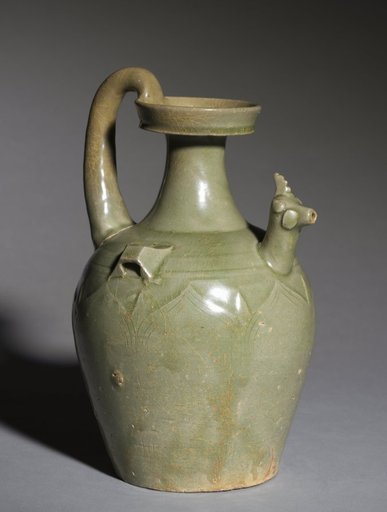
Chicken-Headed Ewer
From the collection of Cleveland Museum of Art. Free to download, adapt and use — no permission needed.
About this work
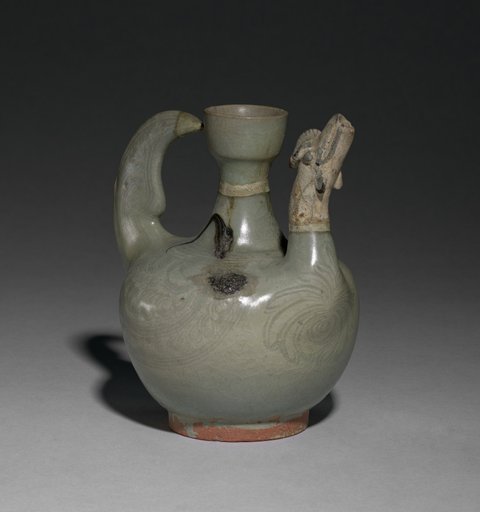
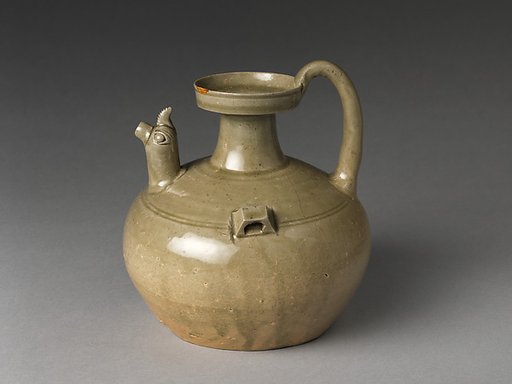
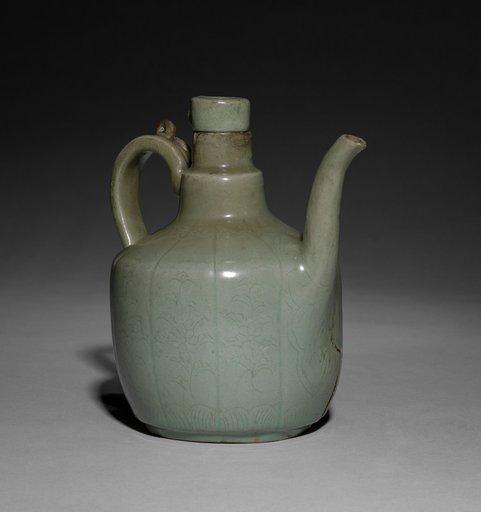
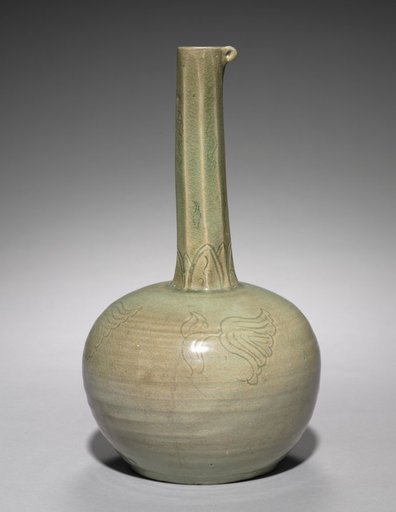
The development of high-fired celadon in the south was a significant achievement in Chinese ceramics history. The ewer's shape was indigenous and appeared to have been transformed from the hu (jar) attached with a small chicken head. Whereas the early chicken-headed ewers have a wide, stout body, this example represents a further development toward more elongated proportions, adding the decoration of carved lotus petals.
Cleveland Museum of Art’s own descriptionCredit lineChicken-Headed Ewer, 220–589 CE. China, Zhejiang province, Southern Dynasties period (420-589). Green-glazed stoneware with incised, carved and applied decoration, Yue ware; overall: 23.5 cm (9 1/4 in.). The Cleveland Museum of Art, Gift of Mr. and Mrs. John D. MacDonald, 1973.84