CC0 · no rights reserved
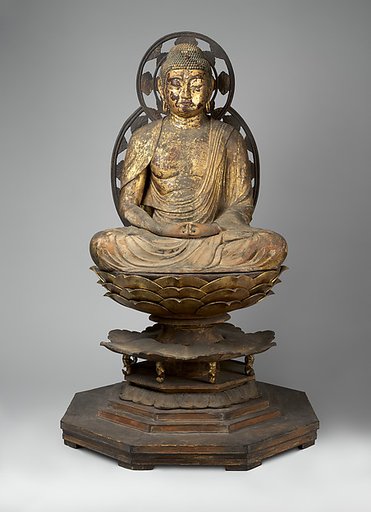
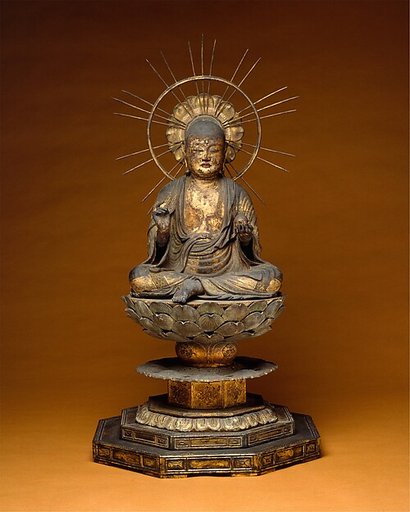
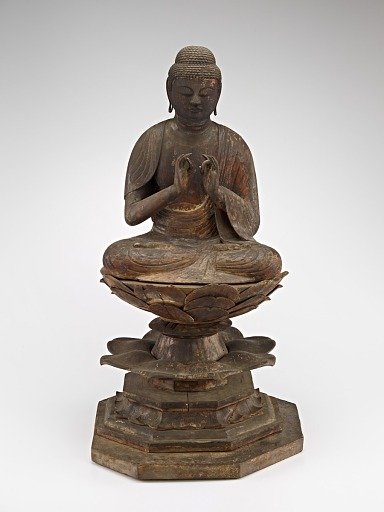
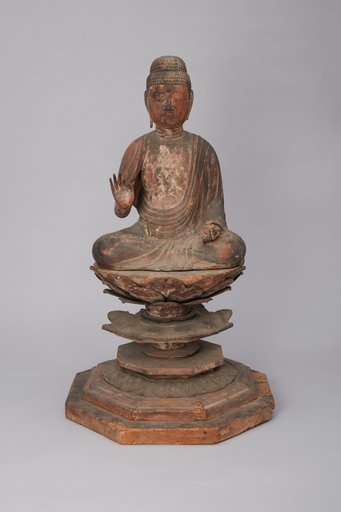
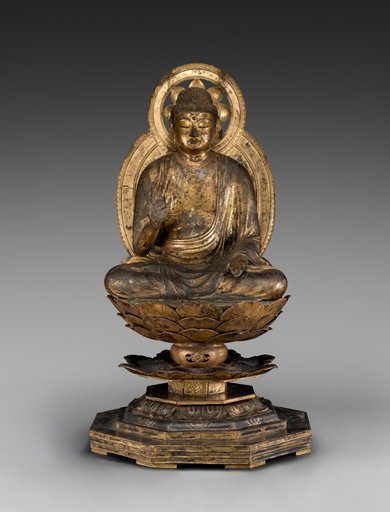
Seated Buddha
From the collection of Cleveland Museum of Art. Free to download, adapt and use — no permission needed.
About this work
Composed of a number of hollowed-out pieces of wood that were then covered with lacquer and gilding, this sculpture served as an image of worship in one of the small temples surrounding Kōfukuji, a major Buddhist temple in Nara, Japan. Like many Buddhas, this figure has its right hand positioned in a gesture meaning "fear not." The left hand is a replacement, so its original gesture, a clue to this Buddha's identity, is unknown. However, as the left foot is exposed over the garment, in lotus position, it may have been created as a Medicine Master Buddha, Yakushi Nyorai in Japanese, or the Buddha of our era, Shakyamuni.
Cleveland Museum of Art’s own descriptionCredit lineSeated Buddha (如来坐像), 1100s. Japan, Heian period (794–1185). Gilded wood; overall: 145.4 cm (57 1/4 in.); figure: 88.2 cm (34 3/4 in.); pedestal: 57.2 cm (22 1/2 in.). The Cleveland Museum of Art, Gift of Takako Setsu and her husband, Iwao, in memory of her father-in-law, Inosuke Setsu, and his long friendship with Sherman E. Lee, 1973.85