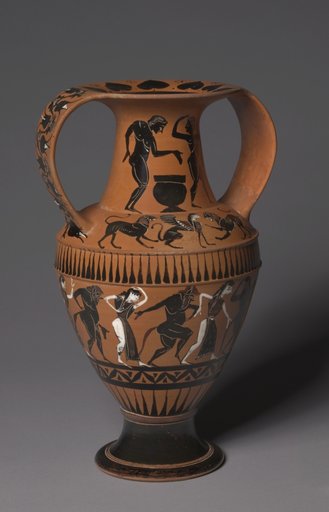
Black-Figure Nikosthenic Amphora (Storage Vessel): Dancing Youths; Sphinxes and Lions; Satyrs and Maenads
From the collection of Cleveland Museum of Art. Free to download, adapt and use — no permission needed.
The distinctive shape of this amphora—wide strap handles, conical neck, and ribs running around the upper body—is a trademark of the potter Nikosthenes, who signed his name below the partially restored handle (together with the verb EPOIESEN , for “made”). Nikosthenes signed nearly 150 surviving vases, more than any other named potter or vase-painter. Made in Athens with an Etruscan clientele in mind, Nikosthenic amphorae emulate precious metal and ceramic bucchero vases made in Etruria (central Italy), where many examples have been discovered. The painted figures include dancing youths (on the neck), sphinxes between lions (on the shoulder), and a continuous procession of dancing satyrs alternating with women (on the body).
Cleveland Museum of Art’s own descriptionSimilar works
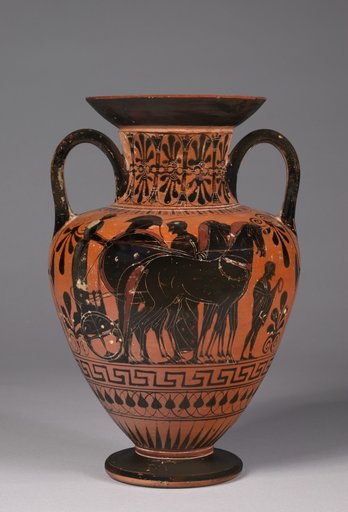 Black-Figure Neck-Amphora (Storage Vessel): Departing Warrior with Chariot (A); Battling Warriors (B)
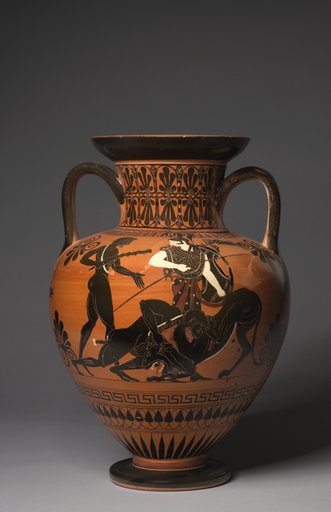 Black-Figure Neck-Amphora (Storage Vessel): Herakles and Nemean Lion (A); Dionysos, Satyrs, and Maenads (B)
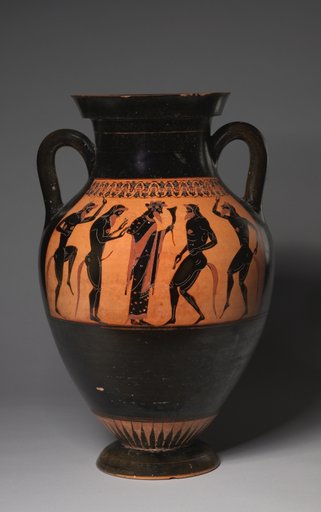 Black-Figure Amphora (Type B; Storage Vessel): Battling Warriors (A); Dionysos and Satyrs (B)
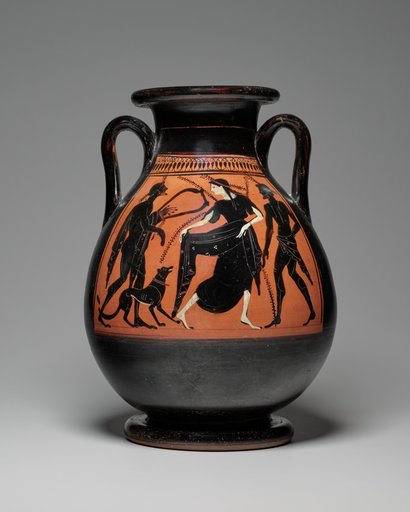 Pelike (Storage Jar)
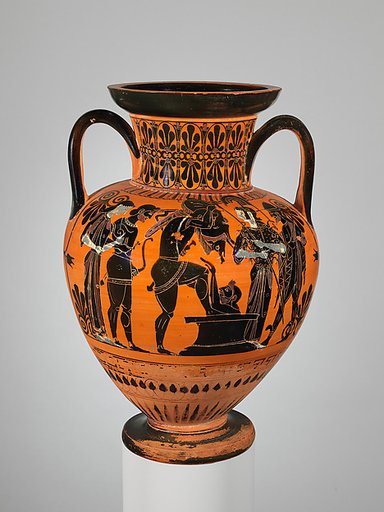 Terracotta neck-amphora (jar)
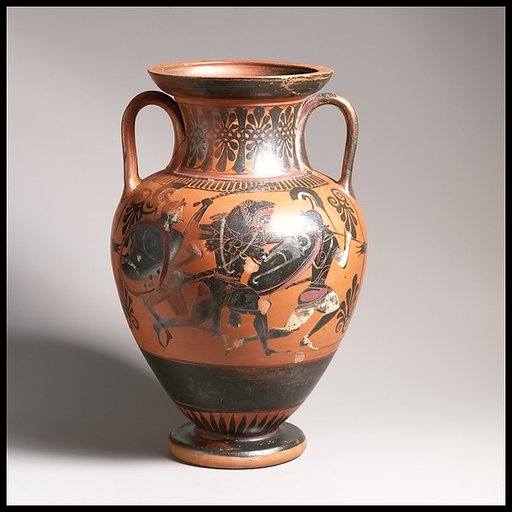 Neck-amphora