Virgin and Child
From the collection of Cleveland Museum of Art. Free to download, adapt and use — no permission needed.
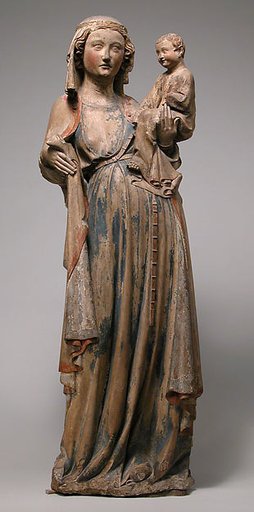
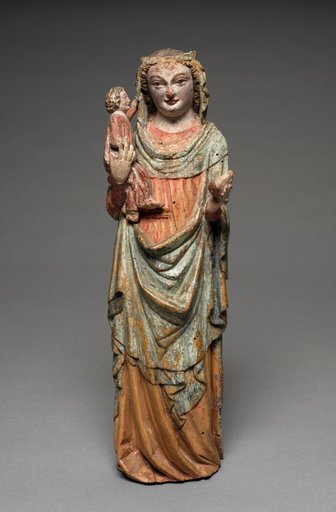
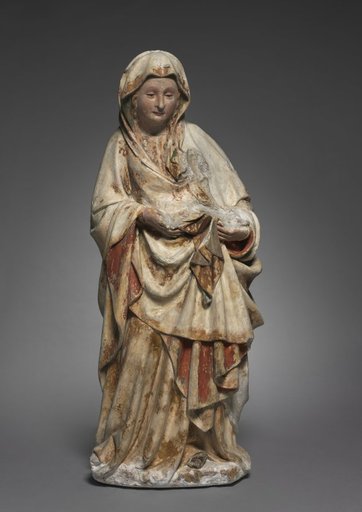
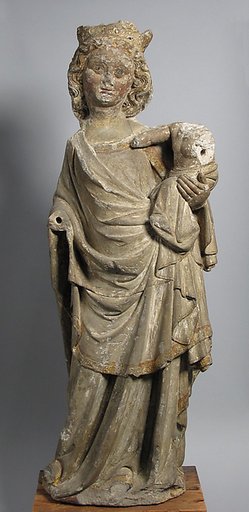
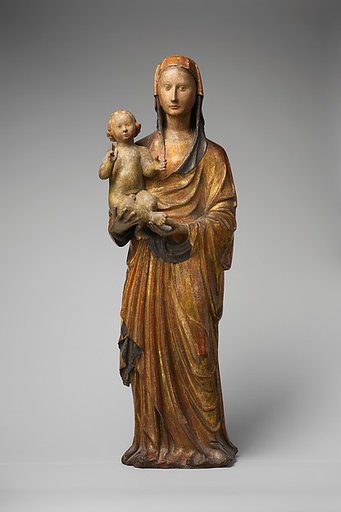
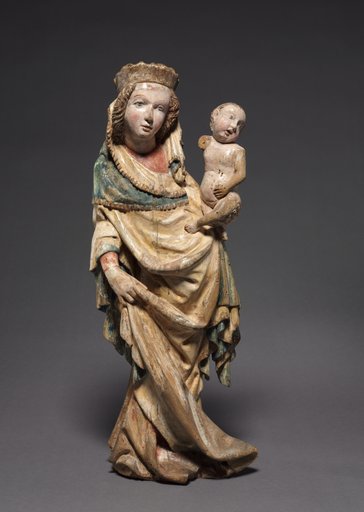
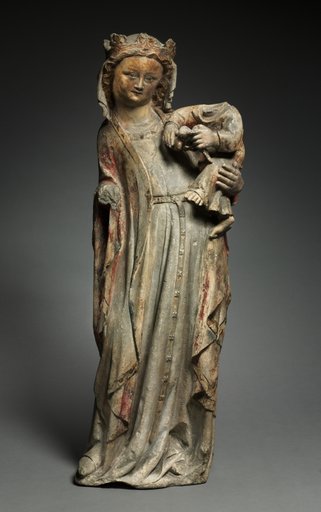
This graceful Virgin and child is a beautiful example from a large number of such figures produced in Lorraine, in eastern France, during the early 1300s. Lorraine at the time had a well-established artistic tradition and was under the rule of the Counts of Bar with established cultural links to both Flanders and England. Many of the surviving Lorraine Virgins share common characteristics consistent with this example--the swaying posture, with the weight of the Virgin placed on the left foot; and an open mantle with an exposed belted gown, the girdle itself trailing to the ground and ornamented with rosettes. Such standing figures were likely made for use in parish churches, cathedrals, aristocratic oratories, and monastic chapels, and attest to the intense veneration rendered to the Virgin during the period.
Cleveland Museum of Art’s own description