CC0 · no rights reserved
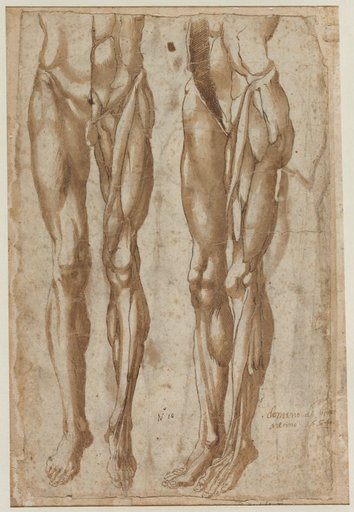
Two Studies of a Flayed Man (recto)
From the collection of Cleveland Museum of Art. Free to download, adapt and use — no permission needed.
About this work
In order to understand the movement of the human form, Michelangelo was known to have studied flayed bodies (cadavers with their skin removed) and in fact made several drawings of them. Bartolommeo da Arezzo—a follower of Michelangelo working a generation after the master—became obsessed with studying corpses, even stealing them from local graveyards. On one side of this sheet (recto), he drew two views of the lower part of the same body, which is half flayed and shown hanging above the ground.
Cleveland Museum of Art’s own descriptionCredit lineTwo Studies of a Flayed Man (recto), 1554. Bartolommeo da Arezzo (Italian, active about 1550–80). Pen and brown ink and brush and brown wash over black chalk; incised (both figures) and pricked (left figure); sheet: 40.5 x 27.6 cm (15 15/16 x 10 7/8 in.). The Cleveland Museum of Art, L. E. Holden Fund, 1975.26.a
Similar works
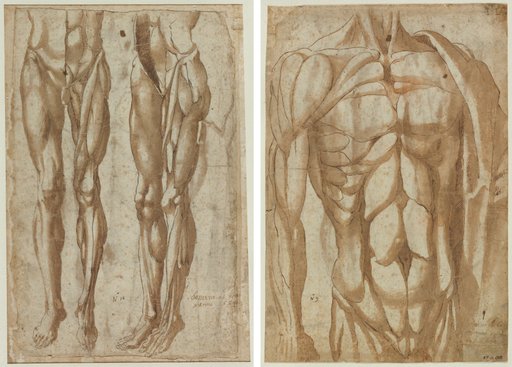 Two Studies of a Flayed Man (recto) Study of a Flayed Torso (verso)
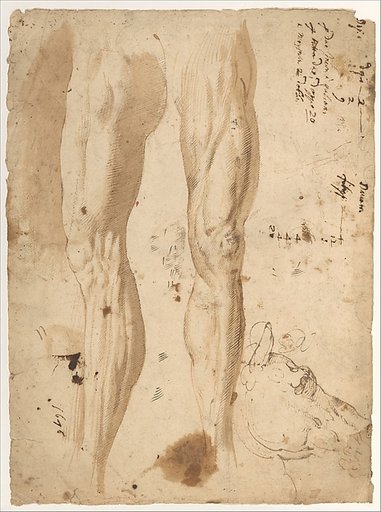 Studies of the Leg of a Man and a Horse's Head (recto); sketches of the back of a man's left shoulder and a chained (?) figure.
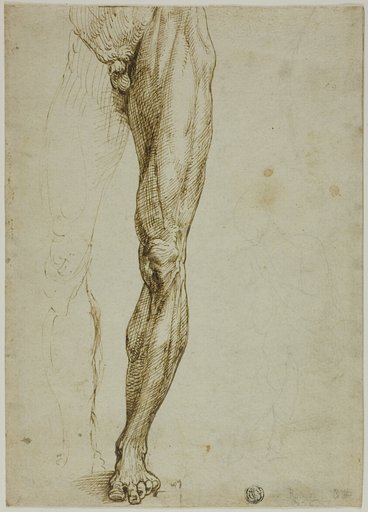 Male Figure Study, with Slight Sketch of Seated Figure
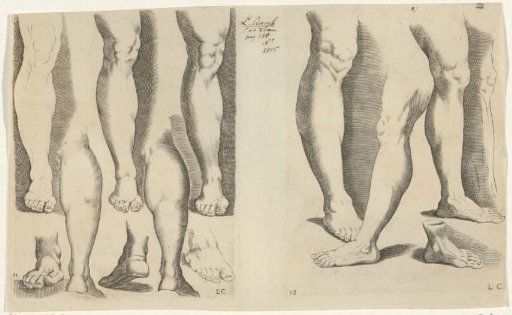 Studies of legs
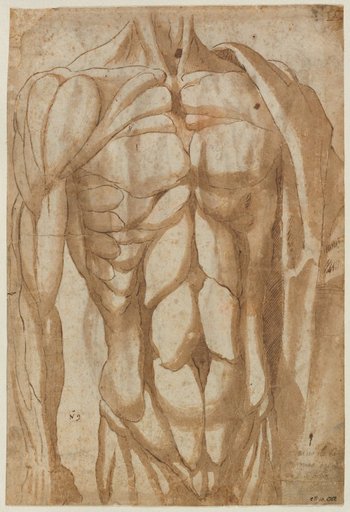 Study of a Flayed Torso (verso)
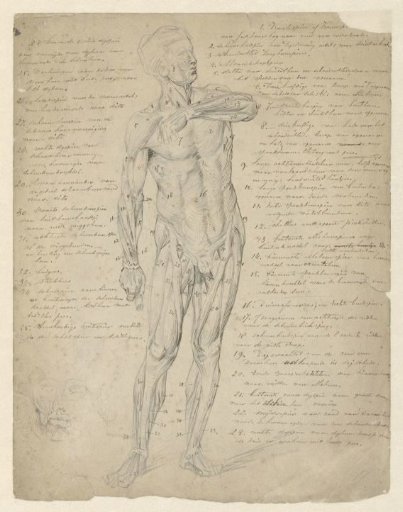 Anatomische studie van staande menselijke figuur