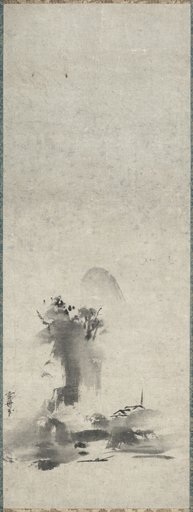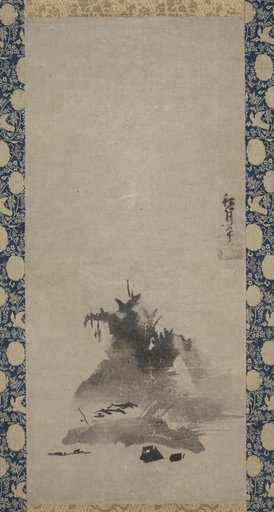
Haboku (Flung-ink) Landscape
From the collection of Cleveland Museum of Art. Free to download, adapt and use — no permission needed.
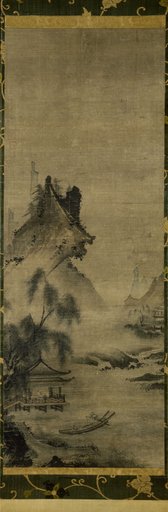
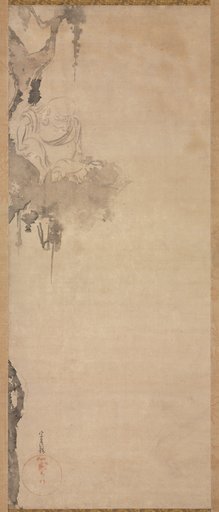
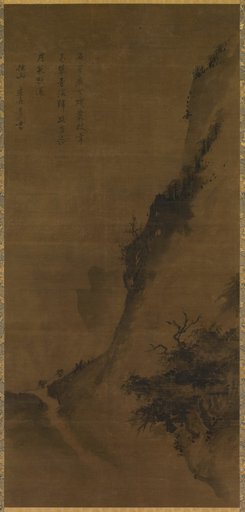
This vague but energetically rendered landscape highlights the brush: the messenger for a moment’s emotional or spiritual state. The painting represents one of many subjects and styles Shugetsu studied and absorbed from the great practitioners of Ming-dynasty China in the late 1400s and early 1500s. The technique of "flung ink," or haboku, disguises purposeful composition as an almost random, distracted series of brushstrokes. Close inspection reveals tonalities and strokes brushed onto a soft, absorbent paper in a range from heavy and wet to crisp ink charges. Not surprisingly, amateur and professional Zen monk-painters favored this "impressionistic" style as an exercise in seeing meaningful detail slowly emerge from what at first seems unclear.
Cleveland Museum of Art’s own description