Shah Jahan
From the collection of Cleveland Museum of Art. Free to download, adapt and use — no permission needed.
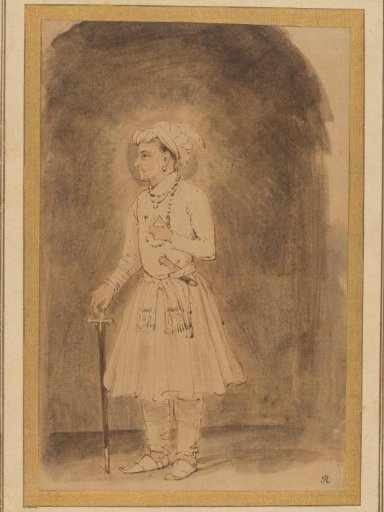
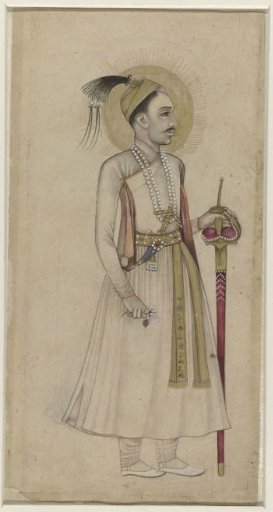
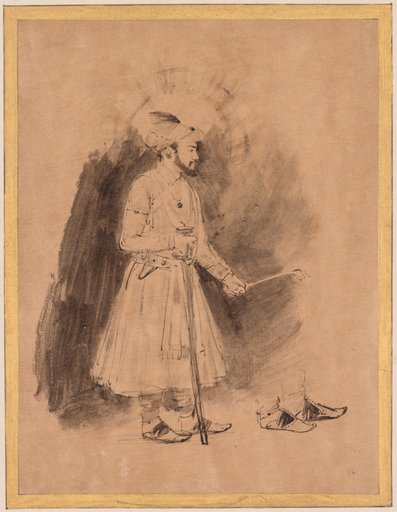
Rembrandt’s drawing portrays Shah Jahan, the ruler of the Mughal Empire from 1628-58. It is one of twenty-three drawings that Rembrandt made after Indian miniatures, which he had very likely studied in an album then in Holland. By the 18th century, the album had been dismantled, and the model for this drawing now resides at the Schloss Schönbrunn, Vienna. Rembrandt imposed his characteristic realist tendencies on a more detailed, formal, and stylized model, bringing the shah to life with especially fine pen strokes on the face and shoes mixed with evanescent brown ink washes around the figure that introduce a dynamic interplay of light, shade, and figure. Above the shah’s head, he scratched away parts of the ink and paper to create a nimbus shape that frames the profile. His meticulous technique and use of a rare and expensive Japanese paper suggest that he regarded his drawings after Mughal paintings as exceptional.
Cleveland Museum of Art’s own description