CC0 · no rights reserved
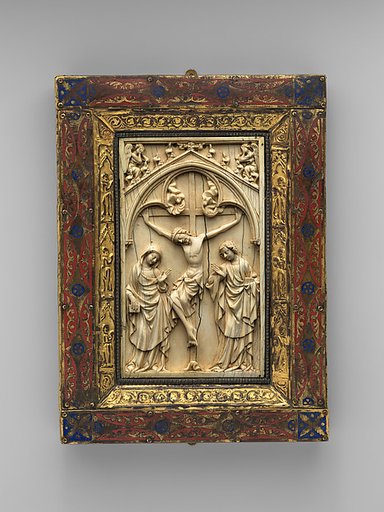
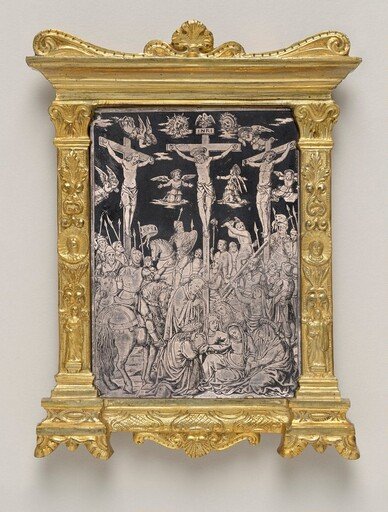
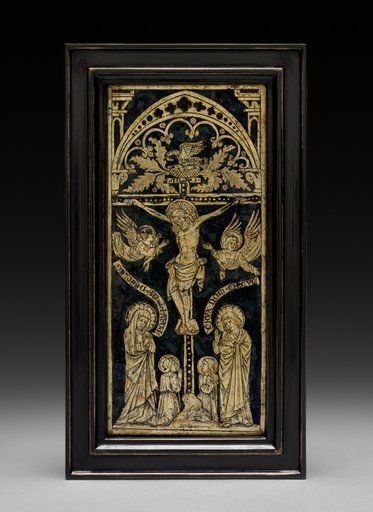
Plaque: The Crucifixion with Angels and Saints
From the collection of Cleveland Museum of Art. Free to download, adapt and use — no permission needed.
About this work
Small glass plaques like this were often combined with plaques of painted wood and framed within elaborate architectural reliquaries or small altarpieces. The decorative technique, called verre églomisé, is a process in which the reverse side of a glass is gilded and then engraved with designs. The pelican, shown above the cross piercing its breast to feed its young, became a common symbol of Christ's sacrifice on the cross.
Cleveland Museum of Art’s own descriptionCredit linePlaque: The Crucifixion with Angels and Saints, c. 1400–1425. Northern Italy, Padua?, 15th century. Verre églomisé (reverse gilded glass, engraved and painted); overall: 19.4 x 9.4 x 0.4 cm (7 5/8 x 3 11/16 x 3/16 in.). The Cleveland Museum of Art, John L. Severance Fund, 1978.41