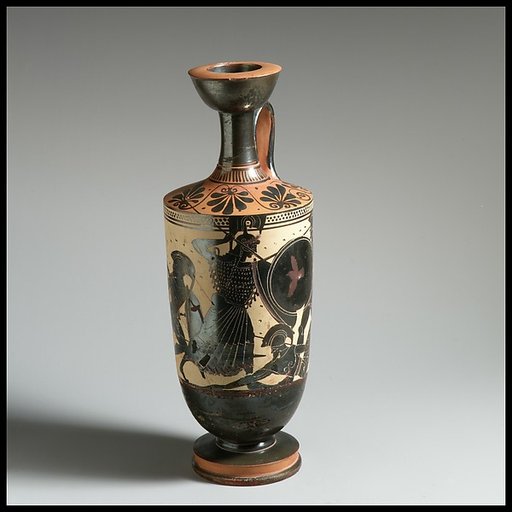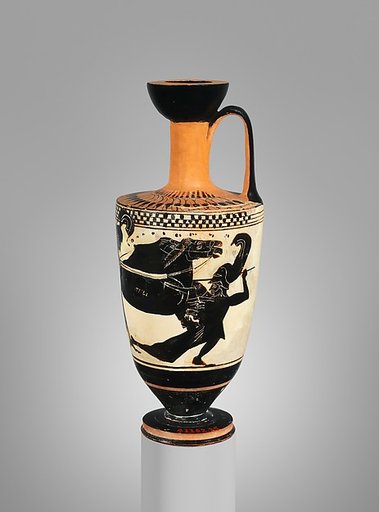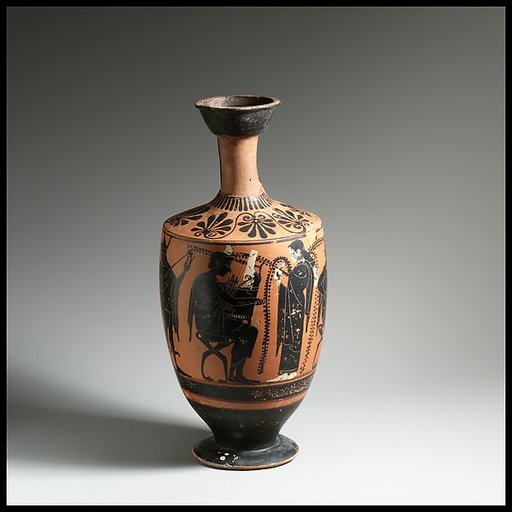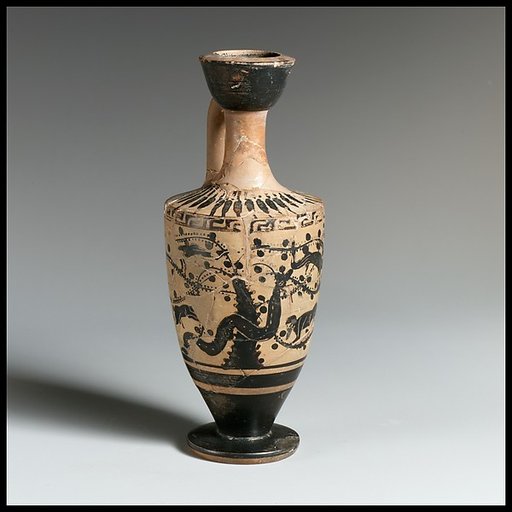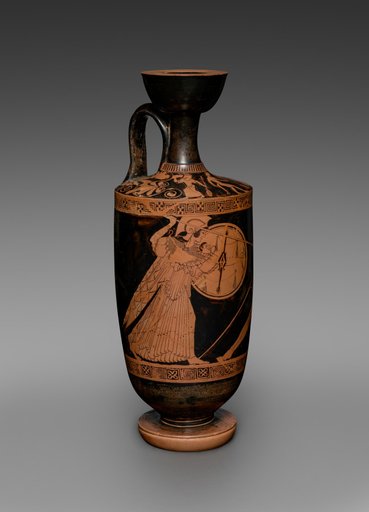
Red-Figure Lekythos (Oil Vessel): Athena Slaying Giant (body); Satyr between Maenads (shoulder)
From the collection of Cleveland Museum of Art. Free to download, adapt and use — no permission needed.
The two separate areas of figural decoration on this vase have been attributed to different painters: the small satyr and maenads on the shoulder to the Berlin Painter; and the larger figures of Athena and the slain Giant Enkelados on the body to the Painter of Goluchow 37. Scholars have named these two painters, whose actual names remain unknown, after other vases they have painted, now in Berlin and Warsaw. The victory of Athena and the Olympian gods over the Giants has been interpreted as a metaphor for the Greek victory over the Persians around the time this vase was made. Thus, although Enkelados appears as a fully armed warrior, he falls in utter and complete defeat—bleeding from multiple wounds, eyes rolling back, sword dropping from his hand.
Cleveland Museum of Art’s own description