CC0 · no rights reserved
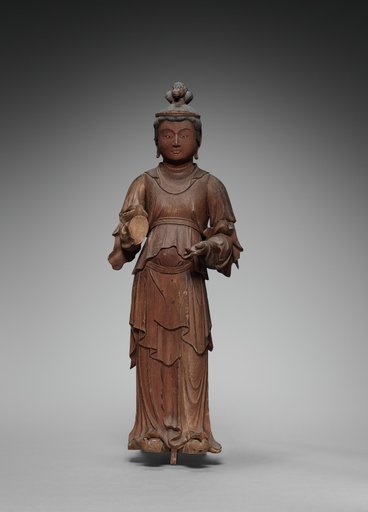
Batō (Horse-Headed) Kannon
From the collection of Cleveland Museum of Art. Free to download, adapt and use — no permission needed.
About this work
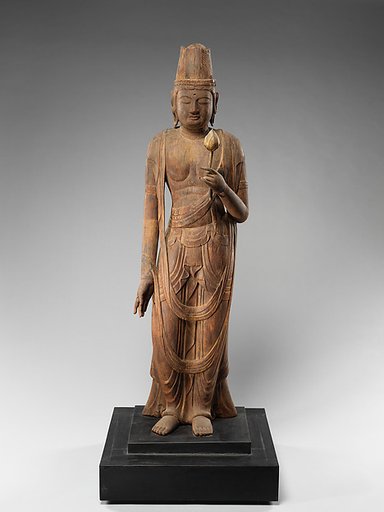
Batō Kannon, or Hayagriva Avalokiteshvara in Sanskrit, is the “horse-headed” form of the bodhisattva of compassion, who presides over the realm of animals in the Buddhist Six Realms of Transmigration (rebirth). A horse’s head appears in the hair of this sculpture to identify it. Bodhisattvas are beings who, though enlightened, choose to remain within the worlds of existence to help others. The six realms are heaven, hell, human, animal, hungry ghost, and ashura , or fierce supernatural entities.
Cleveland Museum of Art’s own descriptionCredit lineBatō (Horse-Headed) Kannon (馬頭観音像), early 1300s. Japan, Kamakura period (1185–1333). Wood with traces of color and gold; overall: 110.6 cm (43 9/16 in.); base: 28 cm (11 in.); figure: 82.6 cm (32 1/2 in.). The Cleveland Museum of Art, John L. Severance Fund, 1981.1.a