CC0 · no rights reserved
Sleeve from a Tunic
From the collection of Cleveland Museum of Art. Free to download, adapt and use — no permission needed.
About this work
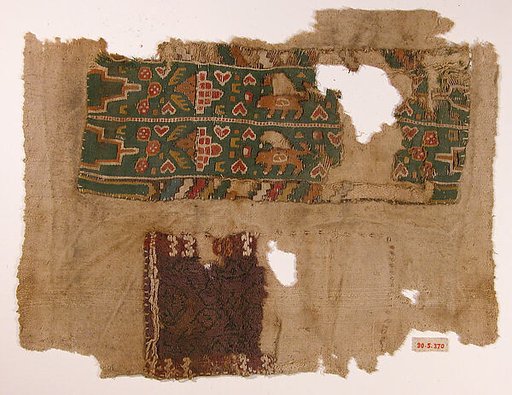
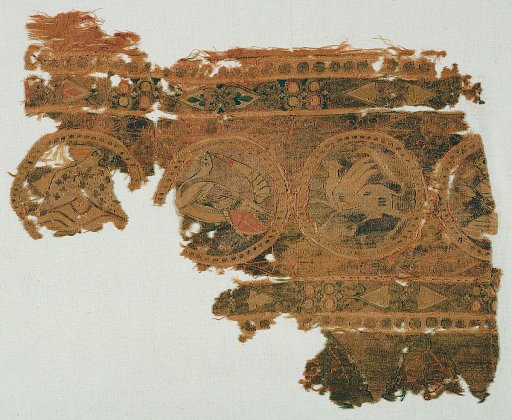
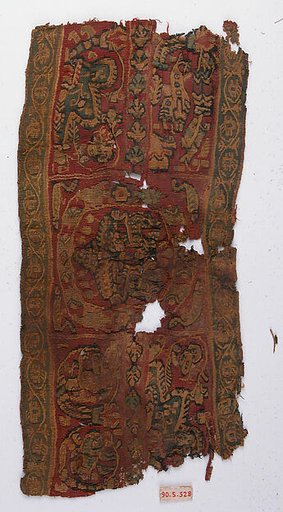
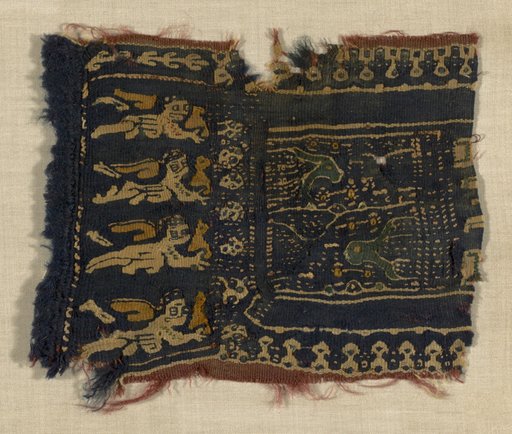
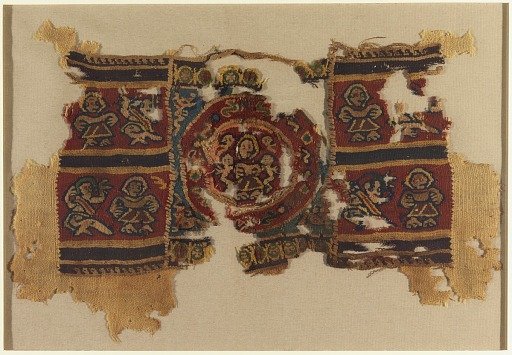
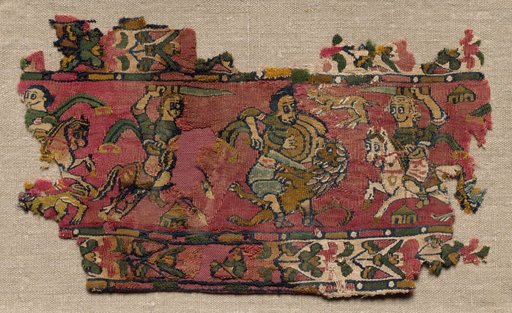
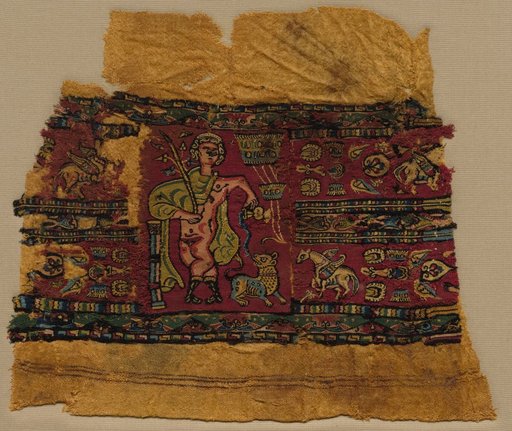
Figures and winged animals from ancient Greece and Rome remained popular during the early Islamic period of the Umayyad and Abbasid dynasties. The naked figure could represent Dionysus, the Greek god of wine; he holds his thyrsus, a staff decorated with ivy leaves and pinecones, while pouring liquid from a small jug for the panther. These colorful designs probably adorned the sleeve and front or back of a tunic, a garment worn directly on the body for over 1,000 years, from Roman antiquity to the Middle Ages. Popular decorations were regularly reused and sewn onto new tunics, as can be seen on this winter garment made of wool.
Cleveland Museum of Art’s own descriptionCredit lineSleeve from a Tunic, 700s. Egypt, Umayyad period (661–750) or Abbasid period (750–1258). Wool; plain weave with slit-tapestry weave; overall: 31.7 x 34.3 cm (12 1/2 x 13 1/2 in.); mounted: 41.3 x 46.4 cm (16 1/4 x 18 1/4 in.). The Cleveland Museum of Art, Andrew R. and Martha Holden Jennings Fund, 1982.107.c