CC0 · no rights reserved
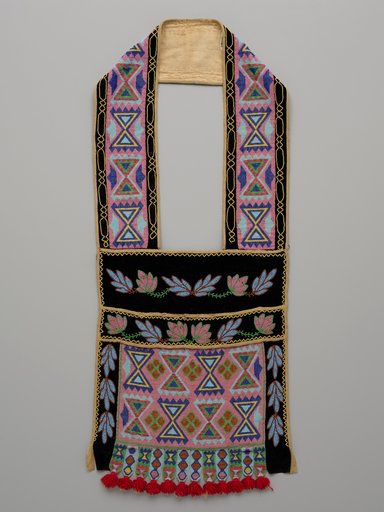
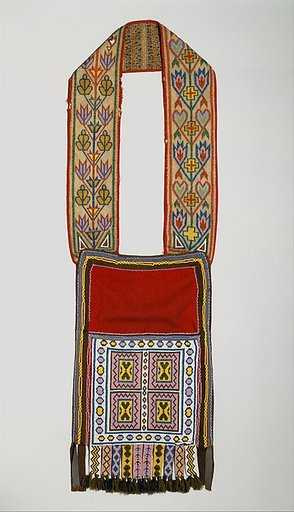
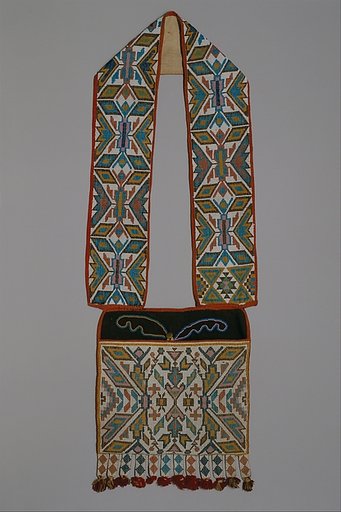
Bandolier (Shoulder) Bag
From the collection of Cleveland Museum of Art. Free to download, adapt and use — no permission needed.
About this work
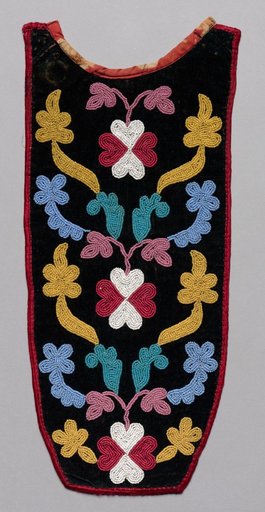
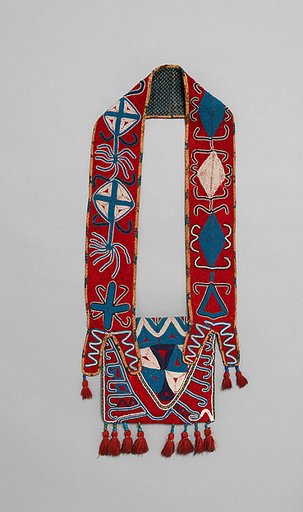
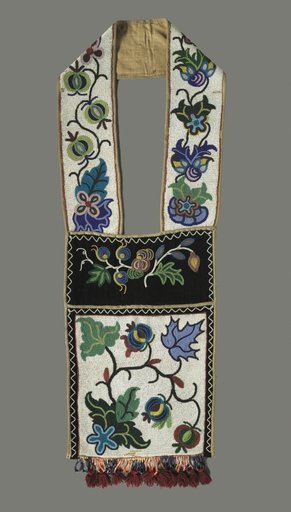
Inspired perhaps by British ammunition pouches, bandolier bags evolved from smaller native bags to become one of the flashiest, most important items of Woodlands formal attire during the 1800s. Europeans introduced floral motifs to Woodlands imagery, but artists’ enthusiastic response suggests the motifs struck a chord in native thought, which holds plants to be animate and powerful. This example features blueberries, literally “soul food” that refreshes the spirit of the living and the dead, and alludes to new seasonal growth.
Cleveland Museum of Art’s own descriptionCredit lineBandolier (Shoulder) Bag, 1880s?. Northeastern Woodlands, Great Lakes Region, Anishinaabe (Ojibwe) People. Plain weave cotton, twill weave wool, velvet, plaited wool binding, wool tassels, glass beads; average: 107.3 x 33 cm (42 1/4 x 13 in.). The Cleveland Museum of Art, James Albert and Mary Gardiner Ford Memorial Fund, 1982.61