CC0 · no rights reserved
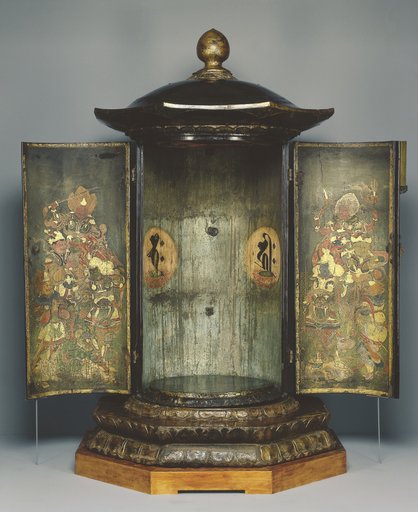
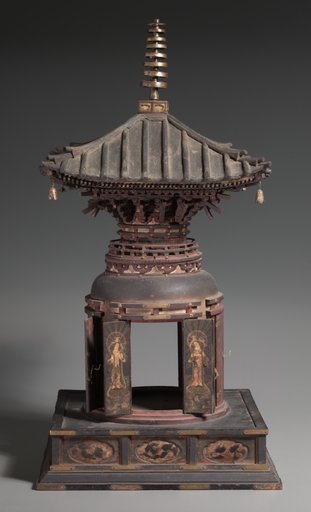
Many-Jeweled Stupa Reliquary (Tahōtō shari yōki)
From the collection of Cleveland Museum of Art. Free to download, adapt and use — no permission needed.
About this work
Earthen mounds that marked the sites of interred relics in ancient India are called stupas. As Buddhism traveled through East Asia, the mounds took on the form of towers called “pagodas” by Westerners. This miniature tower, painted with Buddhist deities on the interiors of the doors on each side, likely once held items considered to be sacred relics. The deities on the doors have been tentatively identified as the four bodhisattvas of the sacred text the Lotus Sutra, and two Guardian Kings known as Niō.
Cleveland Museum of Art’s own descriptionCredit lineMany-Jeweled Stupa Reliquary (Tahōtō shari yōki), early to mid-1300s. Japan, Kamakura period (1185–1333). Wood and metal; average: 68 x 34.4 cm (26 3/4 x 13 9/16 in.). The Cleveland Museum of Art, John L. Severance Fund, 1982.8