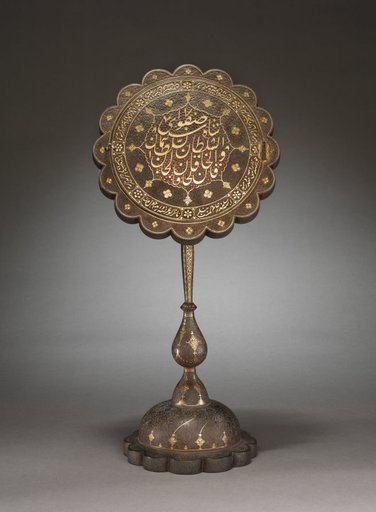
Mirror Stand
From the collection of Cleveland Museum of Art. Free to download, adapt and use — no permission needed.
The mirror was both a courtly accouterment and a popular poetic device in Persian literature. The central circular panel has a hinge and hook that opens to reveal the mirror. The texts in the ring are verses by different authors referring to mirrors. One says: Have they placed a mirror facing the sun at the door of that tent, Or is it the light rays shining from the forehead? Such mirrors were popular during the Qajar period (1779–1925), but this example evokes the grandeur of the earlier Safavid period by inscribing in the center the name of Shah Sulayman (1648–1694) who, fittingly, spent most of his 28-year reign with women in the harem, where such mirrors would have been used.
Cleveland Museum of Art’s own description