CC0 · no rights reserved
Fragments with Gold Foil
From the collection of Cleveland Museum of Art. Free to download, adapt and use — no permission needed.
About this work
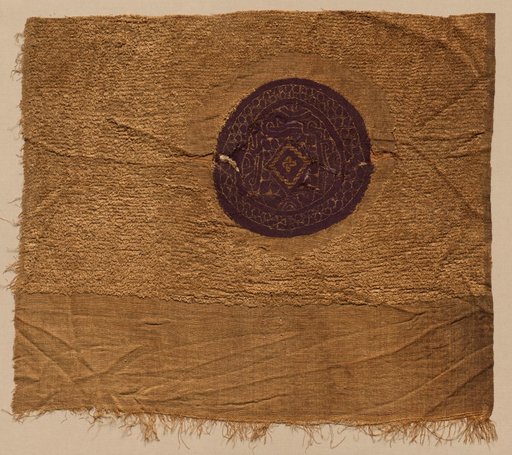
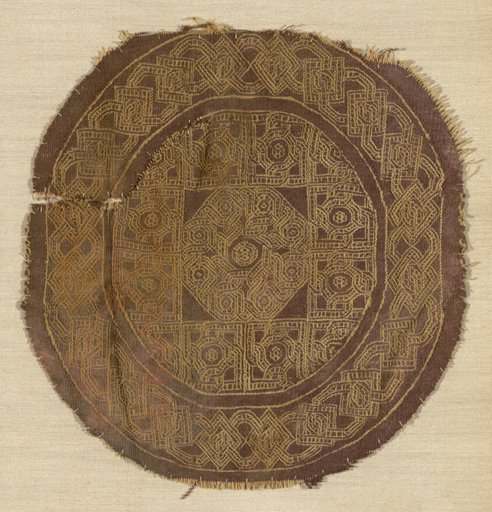
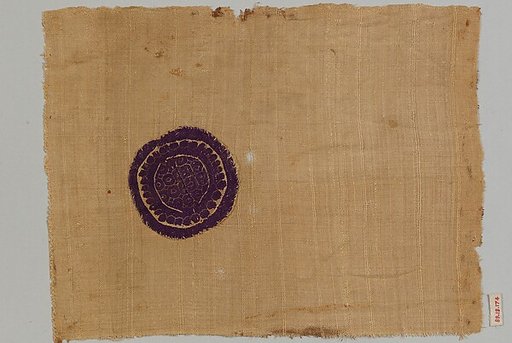
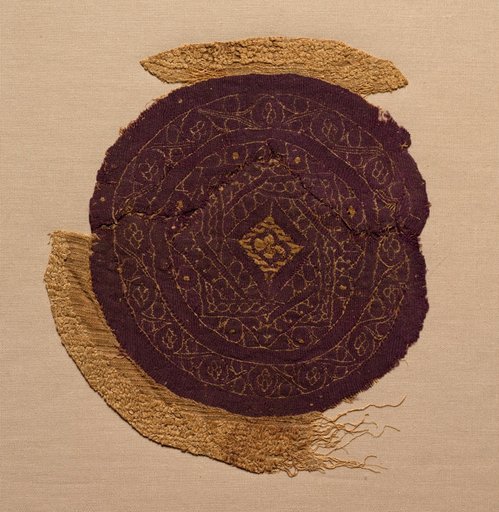
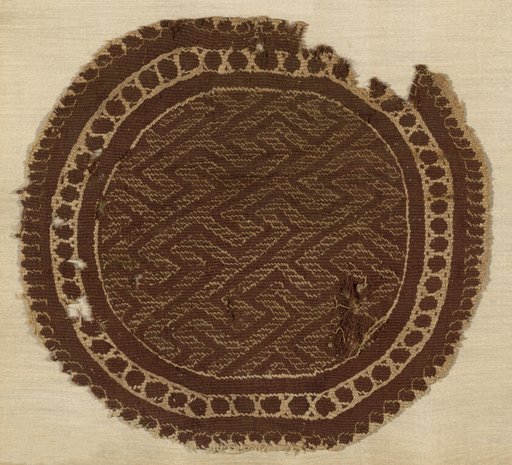
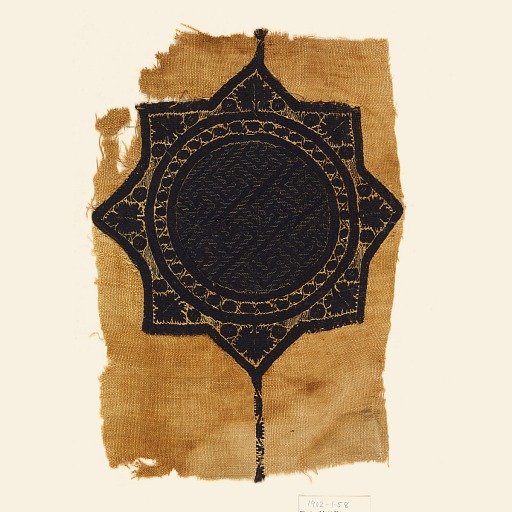
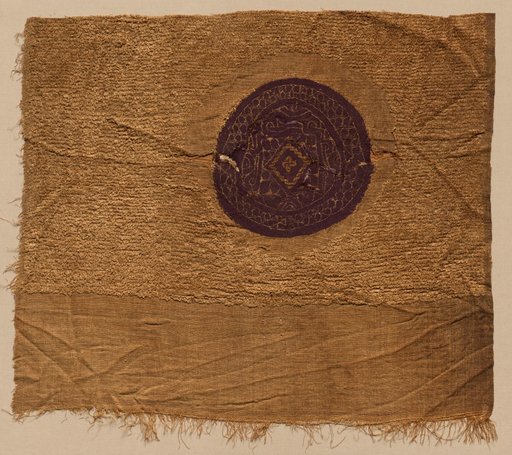
The rare gold foil and rich purple wool in these two fragments originally enriched a luxurious fabric. Costly gold foil wrapped around a silk core forms the central motif within a diamond, woven in tapestry weave. The surrounding interlacing knot design—achieved with three overlapping squares (in the small fragment) or interlacing squares (in the large fragment)—offered protection from danger and harm. The roundels were woven with extra, or supplementary, linen wefts wrapped on the purple ground. Linen pile loops in the ground fabric resisted abrasion in furnishing fabrics and provided insulation in tunics.
Cleveland Museum of Art’s own descriptionCredit lineFragments with Gold Foil, 300s–400s CE. Egypt, Byzantine period. Undyed linen, dyed wool, and gold foil; plain weave with supplementary weft-loops, slit-tapestry weave with supplementary weft wrapping; average: 40.8 x 48.4 cm (16 1/16 x 19 1/16 in.). The Cleveland Museum of Art, Purchase from the J. H. Wade Fund, 1983.140