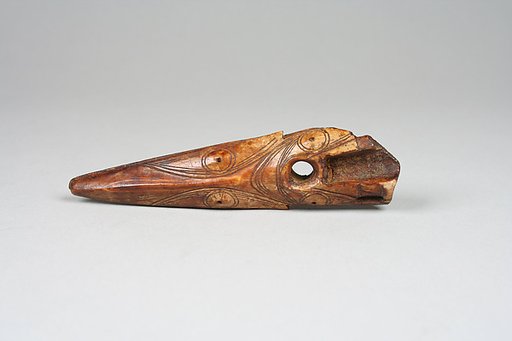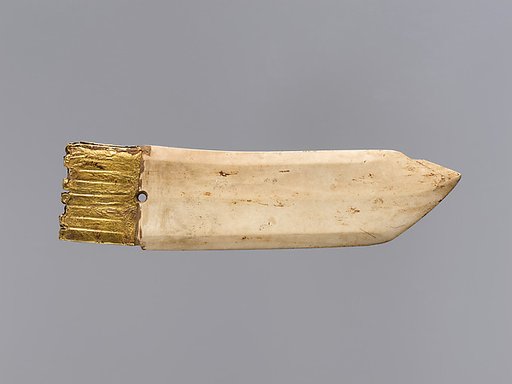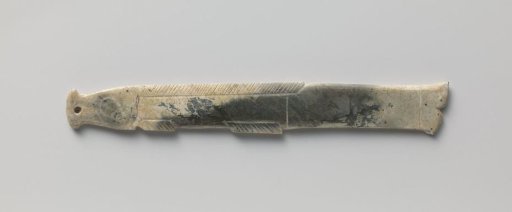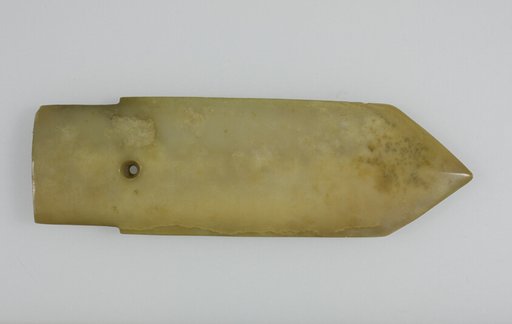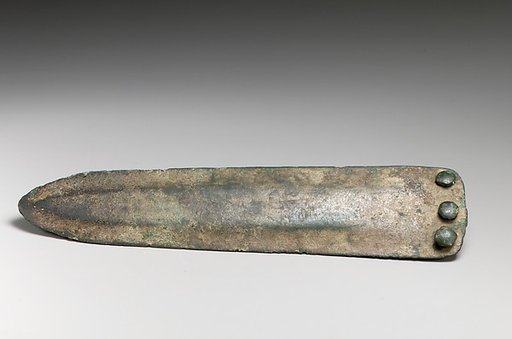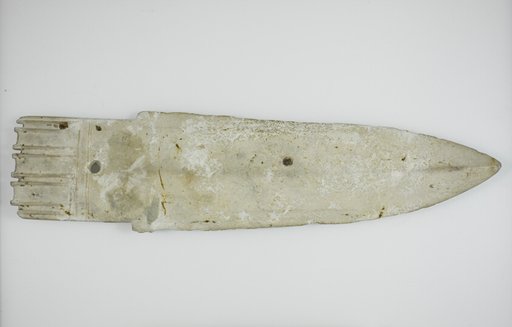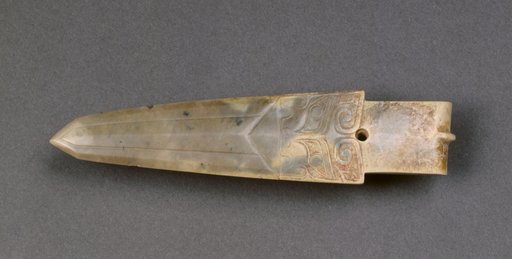
Ceremonial Dagger-Axe with Animal Masks (Ge)
From the collection of Cleveland Museum of Art. Free to download, adapt and use — no permission needed.
Jade is an extremely hard material. In ancient China, it was carved or ground with fine abrasives, such as quartz sand, affixed to cutting or drilling tools. The form of this jade ( ge, ceremonial dagger axe), was likely derived from similarly shaped bronze weapons. The pointed and slightly curved blade was symmetrically carved. It seems to emerge from the mouth of the taotie , the animal mask. The taotie’s curved horns were carved in relief bands; its eyes, snout, and upper jaw are delineated in threadlike relief. Similar taotie designs are also seen on bronze vessels of the same period. The hole in the tang indicates where the blade was originally attached to a wooden shaft.
Cleveland Museum of Art’s own description