CC0 · no rights reserved
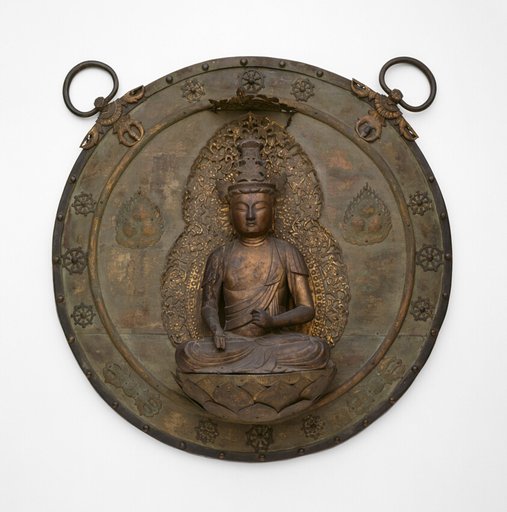
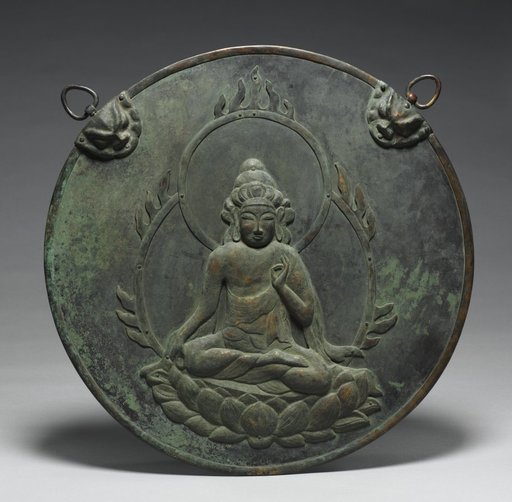
Votive Hanging with Image of Kannon (Kannon Kakebotoke)
From the collection of Cleveland Museum of Art. Free to download, adapt and use — no permission needed.
About this work
Kakebotoke (literally “hanging Buddhist deities”) like this appeared from the latter part of the Heian period. They often hung on the doors of a Shinto shrine hall to indicate the Buddhist manifestation of the god, or kami, inside, or along the eaves of a Buddhist temple hall to indicate the Buddhist deity celebrated there.
Cleveland Museum of Art’s own descriptionCredit lineVotive Hanging with Image of Kannon (Kannon Kakebotoke) (観音懸仏), mid- to late 1300s. Japan, Nanbokuchō period (1336–92). Bronze with repoussé and etching; diameter: 52.5 cm (20 11/16 in.). The Cleveland Museum of Art, Leonard C. Hanna Jr. Fund, 1985.16