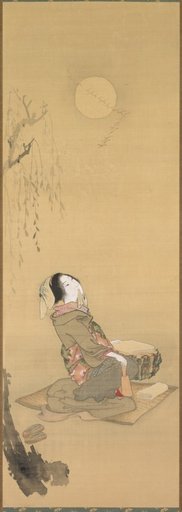
Woman Looking at the Moon
From the collection of Cleveland Museum of Art. Free to download, adapt and use — no permission needed.
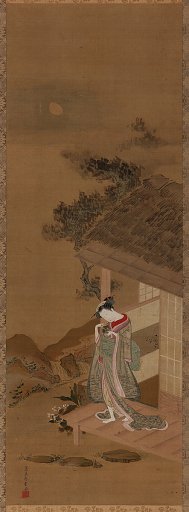
In this scene, a woman pauses in her task of fulling cloth (pleating or gathering cloth to make it full) to gaze at the moon just as a flock of geese pass over. Perhaps overcome by the moment, she bites the end of her kerchief. The simple elements of fulling blocks, geese, and a full moon are traditional symbols of autumn in Japanese art. The pounding of the silk also has erotic connotations in East Asian painting. Although it is not signed, the style resembles work by painter Teisai Hokuba, known for his ukiyo-e or “pictures of the floating world.” Hokuba was an eminent disciple of the famed artist Katsushika Hokusai (1760–1849). The woman's white face appears to reflect the moon's surface. In Japan, the autumn harvest moon has many romantic associations and is a popular subject of poetry. In mid-autumn a Moon-Viewing Festival is held on the fifteenth night of the eighth lunar moon, which is regarded as the Harvest Moon. This festival became popular during the Edo period, when the citizens of the city of Edo enjoyed a festival in honor of the moon held on the banks of the Sumida River.
Cleveland Museum of Art’s own description